Empire State Building Observatory: The Complete Ticket Guide
What's the difference between the 86th and 102nd floor at the Empire State Building?
The 86th floor is the main observatory, open-air with a wraparound outdoor deck, and every ticket includes it. The 102nd floor is an enclosed, higher deck sold as an add-on to the 86th floor ticket, not as a standalone ticket, so it always costs more and is booked in addition to the base admission.
Two observatories, two tickets, one building
The Empire State Building is not a single observation deck — it is two, stacked on top of each other, sold as two separate purchases. The 86th floor is the main, open-air observatory included in every standard ticket. The 102nd floor, higher up and fully enclosed, is an add-on booked on top of the 86th floor ticket, priced separately and often tied to its own timed entry slot.
There is no version of a ticket that starts at the 102nd floor alone, and no version of the base ticket that quietly includes it. Anyone planning a visit around “seeing the top” should decide before arriving whether that means the 86th floor or the full climb to the 102nd, because the price difference is real and the upgrade cannot always be added at the door if slots are sold out.
The building itself sits at the corner of Fifth Avenue and 34th Street in Midtown Manhattan, close enough to Herald Square, Penn Station, and Grand Central Terminal that it fits easily into a half-day Midtown itinerary built around Midtown and Times Square. For a broader sense of how it fits into a first visit, see the destination overview for Manhattan or a full things to do in Midtown and Times Square roundup.
What the 86th floor ticket actually gets you
The 86th floor observatory is the building’s original observation deck, opened in 1931, and it remains the deck most visitors mean when they say they are “going up the Empire State Building.” It is genuinely outdoors: a wraparound deck circling the building on all four sides, behind a floor-to-ceiling glass and wire safety barrier, open to the sky and to whatever the weather is doing that day. That openness is part of the appeal — unobstructed photos, a real sense of height and wind — but it also means a January visit is a cold one, and a July visit can be sticky and hazy. Every general admission ticket, whichever tour or provider it is booked through, includes this deck as the baseline.
a standard ticket covering the 86th floor observatory and the building’s exhibits is the most common way to book, and it typically includes access to the small museum on the second floor covering the building’s construction and history — a reasonable way to fill the wait before heading up.
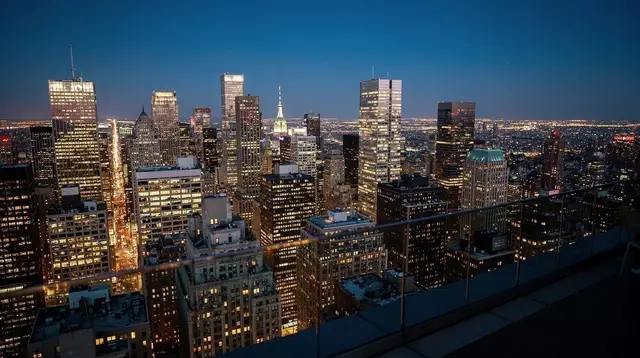
The 360-degree view from 86 floors up takes in the full spread of Manhattan’s grid to the north, the East River and Queens to the east, the Hudson and New Jersey to the west, and, to the south, Lower Manhattan with One World Trade Center rising above the skyline — a useful visual anchor for anyone who has also visited or plans to visit the 9/11 Memorial or booked a ticket through the separate One World Observatory guide. On a clear day, the view extends well past the city into the surrounding states.
What the 102nd floor adds — and what it does not
The 102nd floor deck sits roughly 16 floors above the 86th, enclosed rather than open-air, and it is marketed as a quieter, less crowded, higher vantage point. It is sold exclusively as an add-on to the base 86th floor ticket — never as a ticket on its own — and it is priced on top of that base admission, not folded into it. Visitors who want both decks need to book (or select, in a combined ticket) both components, and on busy days the 102nd floor add-on can have its own limited, timed capacity, separate from the general flow of the 86th floor.
The practical implication is simple but frequently misunderstood: buying “a ticket to the Empire State Building” does not automatically mean a ticket to the top. Anyone set on reaching the 102nd floor should confirm, at the point of booking, that the ticket explicitly includes that upgrade — not assume it based on price alone, since combined tickets and base tickets can look similar at a glance.
| Deck | Setting | Included in base ticket? | Typical draw |
|---|---|---|---|
| 86th floor | Open-air, wraparound | Yes, standard on every ticket | Original deck, outdoor photos, museum access |
| 102nd floor | Enclosed, higher | No — separate paid add-on | Higher vantage, generally shorter waits |
Queues, timing, and when to actually go
Queues build in two places: the ticket/entry line at street level, and the security screening before the elevators, which is comparable to airport-style screening. On top of that, elevator capacity to the 86th floor is limited, so even ticket holders can face a wait once inside. These waits are not evenly distributed through the day. Mornings, close to opening, are consistently the quietest window. Waits build through the afternoon and peak in the late afternoon and evening, particularly around sunset, when both tourists chasing the golden-hour view and evening visitors converge at once.
For anyone visiting during that peak window, a timed-entry or skip-the-line ticket is a genuine time-saver, not just an upsell — standard queues in the late afternoon can run long enough to eat into an evening’s plans. For an early-morning visit, the gap narrows considerably, and a standard ticket is often perfectly workable. Sunrise-specific access exists as its own product for early risers who want the deck close to empty; an early sunrise access ticket to beat the crowds entirely is worth considering for anyone building their trip around a quiet, photogenic visit rather than convenience of scheduling.
The building is open every day of the year, with last admission generally in the late evening — but exact closing and last-entry times shift by season and around holidays, so it is worth checking the posted hours for the specific date of a visit rather than assuming a fixed schedule.
What to wear, and getting the photo
Because the 86th floor is genuinely open to the elements, dressing for the deck matters more than dressing for the street. A jacket that seems unnecessary at ground level can feel thin once wind funnels around the building 86 floors up, and that gap between street-level and deck-level conditions is easy to underestimate, especially in shoulder-season months when the weather can shift over the course of an afternoon. In winter, the wind chill on the open deck is a genuinely different experience from a walk through Midtown at street level, and gloves make photography a lot more comfortable when bare fingers meet a cold camera or phone. Summer visits run the opposite risk — the deck itself offers little shade, so a warm, hazy afternoon can feel more exposed than expected.
Photography is one of the main reasons people choose one deck over another. The glass-and-wire safety barrier on the 86th floor is unobtrusive enough for most phone and camera shots, but a small lens hood or simply shooting between the wires with a longer lens helps avoid reflections. Sunrise and sunset bracket the best light, which is part of why the dedicated early-access product exists: a sunrise ticket that reaches the deck before the standard queue even forms trades a very early start for a nearly empty observatory and the kind of soft, low-angle light that midday visits simply cannot match. For anyone weighing that early start against a conventional daytime visit, the trade-off is really about priorities: uncrowded photos and quiet versus a more convenient wake-up time.
Accessibility and visiting with kids or a group
Both observatories are reached by elevator rather than stairs, and the decks themselves are laid out to be navigable without steps, which makes the building a workable stop for visitors using a wheelchair or otherwise managing limited mobility. Security screening follows an airport-style process at ground level before the elevator bank, and that stage is usually the least accessible-friendly part of the visit simply because of the volume of people moving through it at once — arriving outside the peak afternoon window eases that bottleneck for anyone who needs more time or space to move through security comfortably.
For families, the open-air 86th floor tends to hold a child’s attention better than an enclosed deck, if only because there is more to see and the wind and height itself become part of the novelty. The second-floor museum covering the building’s 1930s construction, included with the standard observatory and museum ticket, gives younger visitors something concrete to look at before or after the deck itself, which helps break up what can otherwise be a long wait for a shorter attention span. Groups mixing ages and mobility levels generally do best sticking to the 86th floor alone rather than adding the 102nd floor upgrade, since the second elevator transfer and its own timed slot add another layer of coordination that is not always worth it for a group traveling at different paces.
Booking approaches beyond the standard ticket
Straightforward general admission is only one way in. A self-guided observatory ticket paired with a digital audio tour adds context on the building’s Art Deco design and 1930s construction without committing to a fixed group schedule. For visitors who want the Empire State Building folded into a wider look at the surrounding blocks, a guided Manhattan walking tour built around the Empire State Building combines the observatory with a look at the neighborhood on foot.
There are also novelty add-ons unrelated to the observatory itself, including a nearby licensed shop tie-in via a combined Empire State Building and Harry Potter shop ticket, useful mainly for travelers already planning to visit both.
Whichever option is booked, it is worth re-checking at purchase whether the 102nd floor is included — the difference in what is actually being bought is the single most common point of confusion among first-time visitors.
Not the same building as Top of the Rock or One World
New York has three major Midtown-and-Lower-Manhattan observation decks that get confused constantly: the Empire State Building, Top of the Rock at Rockefeller Center, and One World Observatory atop One World Trade Center downtown. They are owned and operated independently, ticketed through entirely separate systems, and there is no reciprocity between them — a ticket to one confers no discount, access, or transfer benefit at either of the others.
Deciding between them is really a matter of which skyline a visitor wants in the frame: Top of the Rock and Summit One Vanderbilt both look back toward the Empire State Building itself, making it the subject rather than the vantage point, while One World Observatory sits far enough downtown to frame Lower Manhattan and the harbor rather than Midtown.
A side-by-side comparison sits in the Empire State Building vs. One World Observatory guide and the broader best observation deck in NYC comparison; Rockefeller Center’s alternative is covered in the Top of the Rock guide, and Hudson Yards’ angle is in the Summit One Vanderbilt guide and Edge at Hudson Yards guide.
Fitting it into a Midtown day
The Empire State Building pairs naturally with other Midtown fixtures within easy walking distance. Times Square and the Theater District sit a short walk north — useful for anyone booking evening Broadway tickets through TKTS or comparing options in the family-friendly Broadway shows guide.
Grand Central Terminal and the Museum Mile corridor toward the Upper East Side sit within a short subway ride, and Chelsea’s High Line is a comfortable walk or quick ride southwest. Anyone planning a full day rather than a single stop might find it easier to work from a structured one-day Manhattan essentials itinerary or a broader three-day classic New York itinerary that slots the observatory in alongside other major sights without overlap.
Travelers deciding between paying for individual attractions or a bundled pass should weigh the Empire State Building against other big-ticket items in the CityPASS vs. New York Pass comparison and the wider New York City budget planning guide before committing to either a standalone ticket or a multi-attraction bundle.
Eating and resting nearby
The blocks around the building are dense with food options at every price point, which makes it easy to build a meal around the visit rather than treating the observatory as an isolated stop. Korea Way, the stretch of 32nd Street just steps from the entrance, is one of Manhattan’s most concentrated pockets of Korean restaurants and a natural spot for a meal before or after going up. Herald Square, a couple of blocks north, adds a wider mix of casual chains and quick counters for anyone short on time between other Midtown stops. For a more structured food-focused outing elsewhere in the city, the Chinatown and Little Italy food walk or the Greenwich Village food tour guide cover different neighborhoods entirely, but both pair naturally with a Midtown morning built around the observatory.
Anyone stretching the day further afield might combine the visit with a walk toward SoHo and Chinatown or use it as the anchor for a budget weekend itinerary that keeps costs in check across two days rather than trying to see everything at once. Travelers arriving from one of the region’s airports and slotting the Empire State Building into a first day in the city may also find the airport transfer guide for JFK, LaGuardia, and Newark useful for planning the trip in from whichever airport the flight lands at.
The bottom line
The Empire State Building rewards a little planning: know in advance whether the 102nd floor is part of the ticket or an add-on to book separately, pick a morning or sunrise slot to avoid the worst of the afternoon and evening queues, and keep it straight in mind that Top of the Rock and One World Observatory are different buildings, different tickets, and offer no crossover benefit whatsoever. Once those three points are settled, the rest is simply choosing which ticket format — standard, skip-the-line, sunrise, or combined with a walking tour — fits the rest of the day’s plans.
Observation Decks
Verified deep-linked GetYourGuide tours. Book through these links and we earn a small commission at no cost to you.
GetYourGuide does not provide a product photo for this activity — the image shows the meeting point, photographed by us.
9/11 Ground Zero Tour with Optional One World Observatory

Private Downtown All Access One World Observatory 9/11 Memorial Statue of Liberty and Ellis Island