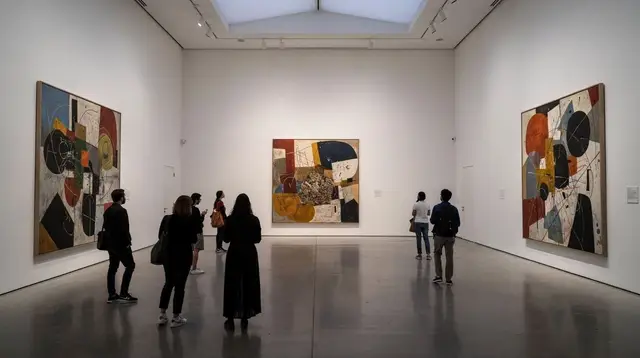
A residential quarter that happens to hold a museum row
The Upper East Side is one of Manhattan’s wealthiest and most residential neighborhoods, running along the eastern edge of Central Park from roughly 59th Street up past 96th Street. Unlike Midtown or the Village, it isn’t built around a single landmark or nightlife strip — it’s townhouses, prewar apartment buildings, private schools, and quiet cross streets, with the commercial energy concentrated on Madison Avenue’s boutiques and Lexington Avenue’s shops and diners.
What draws most visitors here is Museum Mile, the stretch of Fifth Avenue facing the park where nine museums sit within about a mile of each other. The anchor is the Metropolitan Museum of Art, one of the largest and most encyclopedic art museums in the world, but the Mile also includes the Guggenheim, the Jewish Museum, the Cooper Hewitt design museum, and several smaller institutions. Most travelers plan a single museum-focused day here rather than trying to cover the whole strip — a dedicated guide to Museum Mile walks through which of the nine are worth the detour beyond the Met.
This page focuses on the practical realities of visiting: what the Met’s admission policy actually is (and isn’t), how to get here on the subway, and what a day in this part of Manhattan tends to cost once sales tax and food are factored in.
The Met’s pay-what-you-wish policy — and who it’s actually for
This is the single most misunderstood rule on the Upper East Side, and it’s worth stating plainly before anything else: the Metropolitan Museum of Art’s “pay what you wish” admission does not apply to most visitors.
The policy is restricted to two groups:
- Residents of New York State, shown with a valid ID that proves state residency (a driver’s license, a state ID card, or similar).
- Students from colleges and universities in New York, New Jersey and Connecticut, shown with a current, valid student ID from one of those schools.
Every other visitor — which includes the large majority of international tourists, and also most domestic US visitors from outside the tri-state area — pays the posted general admission, which runs roughly $30-35 as of 2026. This is a genuinely common source of confusion: travel forums, older blog posts and even some casual conversations repeat the idea that the Met is “pay what you wish for everyone,” and it simply isn’t anymore. If you’re not a New York State resident and not a student at a qualifying NY/NJ/CT school, budget for full admission and treat any suggestion otherwise as outdated or incorrect.
One admission ticket to the main Met building on Fifth Avenue is typically valid for three consecutive days and also covers The Cloisters, the museum’s medieval art branch uptown in Fort Tryon Park — worth knowing if you want to split a visit across two calmer sessions rather than one long day.
Other Museum Mile institutions run their own separate admission policies and prices; the Met’s pay-what-you-wish exception doesn’t extend to the Guggenheim, the Jewish Museum, or Cooper Hewitt. For the full breakdown of who qualifies and what documentation the admission desk actually accepts, see the complete Met pay-what-you-wish rules.
Getting here: the Lexington Avenue subway line
The Upper East Side is served primarily by the subway line running under Lexington Avenue (the 4, 5, and 6 trains), a few avenue blocks east of Museum Mile. There’s also a newer line under Second Avenue (the Q train), which runs closer to the eastern part of the neighborhood and reaches as far north as 96th Street. Walking from a Lexington Avenue stop to Fifth Avenue and the museums typically takes 8-12 minutes across the width of the neighborhood.
A single subway ride costs $2.90, paid by tapping a contactless credit or debit card or phone through OMNY, or with a physical MetroCard. Free transfers between subway and bus are available within two hours of the first tap. Travelers unfamiliar with either system, or arriving from outside the US where tap-to-pay transit is less common, can check the OMNY and MetroCard guide before their first ride to avoid fumbling at the turnstile during a morning rush.
Useful stops for this neighborhood:
| Stop | Line | Best for |
|---|---|---|
| 68th St-Hunter College | 6 | Southern end of Museum Mile, Frick Collection area |
| 77th St | 6 | Whitney’s former building area, mid-Museum Mile |
| 86th St | 4, 5, 6 | Central Museum Mile, close to the Met |
| 96th St | 6 | Guggenheim, upper end of Museum Mile |
| 96th St | Q | Second Avenue side, quieter approach |
From Midtown and Times Square, the ride up the Lexington Avenue line takes roughly 10-15 minutes depending on the exact starting stop.
What a day here actually costs
Sales tax in New York City is 8.875%, added at the register on top of every displayed price — this applies to purchases at the Upper East Side’s boutiques on Madison Avenue and shops along Lexington and Third Avenues just as it does everywhere else in the city. If a price tag reads $100, expect to pay $108.88 at checkout, not $100.
Typical costs for a day focused on this neighborhood:
| Item | Typical cost |
|---|---|
| Subway ride each way | $2.90 |
| Met general admission (non-NY resident) | $30-35 |
| Deli or fast-casual lunch | $12-18 |
| Sit-down dinner entree | $25-45 |
| Coffee and a pastry | $6-10 |
Restaurants and bars expect a tip of 18-20% of the pre-tax bill, calculated before the 8.875% sales tax is added, not after.
Beyond the Met: the rest of the neighborhood
Museum Mile aside, the Upper East Side rewards a slower walk. Madison Avenue between the 60s and 80s is lined with flagship boutiques and small galleries, a contrast to the busier retail of Midtown. The cross streets in the 60s through 80s hold some of Manhattan’s most distinctive townhouse architecture, largely untouched since the early 20th century when this became the preferred address for the city’s wealthiest families.
The eastern edge of Central Park runs the full length of the neighborhood, and many visitors combine a morning in the park — entering near the Met on Fifth Avenue — with an afternoon inside one of the museums. The park’s Conservatory Garden, near 105th Street, is a quieter, more formal section that gets far less foot traffic than the park’s southern end near Midtown. A guided walking tour of Central Park is a straightforward way to see the park’s north end near the Conservatory Garden alongside its better-known southern landmarks, without having to plan a route on your own.
For visitors staying centrally, it’s also worth comparing this neighborhood to the Upper West Side across the park, which has its own museum anchor in the American Museum of Natural History and a somewhat more relaxed, family-oriented feel.
Because so much of what makes the Upper East Side worth a visit sits along a single stretch of Fifth Avenue, it rewards travelers who are comfortable slowing down rather than checklist-touring. The side streets running east from Museum Mile toward Lexington and Third Avenues hold small, unhurried cafes and neighborhood restaurants that see far fewer tourists than the museum block itself, and they’re a reasonable place to plan a lunch or coffee break between museum visits rather than eating inside a museum cafe at museum prices.
How the Upper East Side compares to a wider museum day
Visitors building a longer stay around New York’s museums rather than treating the Upper East Side as a single stop sometimes prefer to spread the Met, the American Museum of Natural History, and a Brooklyn institution like the Brooklyn Museum across separate days instead of rushing all of Museum Mile at once. If that’s the shape of your trip, a structured plan such as the three days with museums itinerary lays out a pacing that avoids museum fatigue, while travelers splitting time between Manhattan and the outer boroughs may prefer the two days Manhattan and Brooklyn itinerary, which treats a Museum Mile morning as one piece of a broader two-day loop.
Whichever pace you choose, the added admission costs on a museum-heavy day add up quickly once you’re visiting more than one paid institution, so it’s worth checking a realistic daily budget for New York City before committing to a two- or three-museum day rather than budgeting for the Met alone.
Where the Upper East Side fits in a wider New York trip
Because it’s residential and museum-focused rather than built around a single must-see landmark, the Upper East Side tends to work best as a half-day or full-day add-on to a longer Manhattan itinerary rather than a first stop. It pairs naturally with a Central Park visit, and it’s an easy subway ride from Midtown or Harlem if you’re staying in either.
If your main interest is art and you want a private, well-paced introduction to this side of the park, a guided option covering the neighborhood’s architecture and museum context can be worth the cost for a first visit — see the private guided tour of the Upper East and Upper West Sides, which frames both museum-district neighborhoods together. Travelers combining the Upper East Side with a wider look at the island can also consider the sightseeing tour spanning Upper and Lower Manhattan, which is useful for a first full day in the city.
If you’re arriving with bags and don’t want to carry them through a museum, the luggage storage service near Central Park is a practical option before or after a Museum Mile visit. And for travelers planning to venture beyond Manhattan on the same trip, the food tour in Montclair, New Jersey makes a good contrast to a museum-heavy day, reachable from the city as part of a broader look at New Jersey.
Practical notes before you go
A few things worth confirming before setting out:
- Check your residency or student status honestly. The Met’s admission staff can and do ask for ID at the pay-what-you-wish line; a foreign passport or a tourist’s out-of-state ID does not qualify, regardless of what a travel blog may have said.
- Budget the full $30-35 admission if you don’t qualify for the reduced policy, and factor it into your overall New York City budget planning.
- Combine museums thoughtfully. The Met alone can easily fill 3-4 hours; pairing it with a second Museum Mile institution the same day makes for a long day rather than a relaxed one.
- Tap in with OMNY or a MetroCard at any Lexington Avenue or Second Avenue subway entrance — both systems currently work side by side.
- Keep sales tax in mind when shopping on Madison Avenue; boutique prices here are not tax-inclusive.
Upper East Side and Museum Mile: frequently asked questions
Is the Met free for tourists?
No. The Met’s pay-what-you-wish policy applies only to New York State residents and to students from New York, New Jersey and Connecticut colleges and universities, shown with valid ID. Visitors who don’t meet either condition, including nearly all international tourists, pay the posted general admission of roughly $30-35.
How do I get to the Upper East Side by subway?
The Lexington Avenue line (4, 5, 6 trains) runs the length of the neighborhood a few blocks east of Museum Mile, and the newer Second Avenue line (Q train) serves the eastern side up to 96th Street. A single ride costs $2.90, paid with OMNY tap or a MetroCard.
Does one Met ticket cover other Museum Mile museums?
No. The Met’s admission is separate from the Guggenheim, the Jewish Museum, Cooper Hewitt and other Museum Mile institutions, each of which sets its own price and policy. A Met ticket does typically cover a return visit within three days and includes The Cloisters uptown.
Is sales tax included in prices on the Upper East Side?
No. New York City’s 8.875% sales tax is added at checkout on top of any displayed price, whether at a Madison Avenue boutique or a neighborhood deli. It’s not shown on price tags or menus.
How much should I tip at Upper East Side restaurants?
The customary tip is 18-20% of the pre-tax bill, calculated on the subtotal before the 8.875% sales tax is added, not on the total after tax.
How long should I spend on the Upper East Side?
A single museum visit fits into a half-day. A fuller day — one major museum, a walk along Madison Avenue, and time in the eastern end of Central Park — is realistic for most visitors and pairs well with a broader Manhattan itinerary.
Is the Upper East Side walkable from Central Park?
Yes. The neighborhood borders the eastern edge of Central Park directly, and most Museum Mile institutions face the park along Fifth Avenue, making it easy to combine a park walk with a museum visit in the same outing.
What’s the difference between the Upper East Side and the Upper West Side?
Both border Central Park and both have a major museum anchor — the Met on the east side, the American Museum of Natural History on the west — but the Upper East Side is generally quieter, more residential and associated with older wealth, while the Upper West Side has a somewhat more relaxed, family-oriented character.