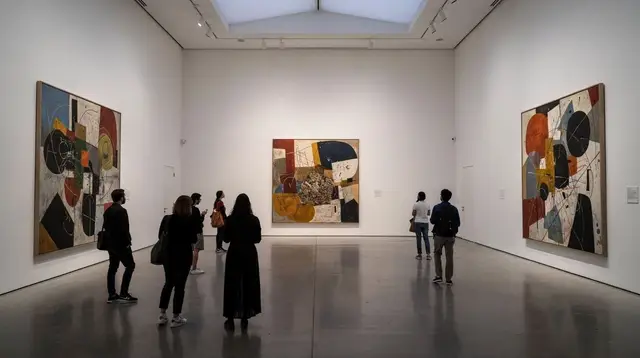
Three Days in New York for Museum Lovers
What is the best 3-day New York itinerary for museum lovers?
Spend day one on the Met and Museum Mile on the Upper East Side, day two walking Central Park itself as the connective link, and day three at the 9/11 Memorial and Museum downtown. Each day centers on one institution or landscape, with half a day minimum set aside so no museum gets rushed.
Most three-day New York itineraries try to stack a museum onto a neighborhood tour onto a shopping stop, and the museum always loses. This one flips that: three days, three institutions, each given the time it actually needs. Day one belongs to the Metropolitan Museum of Art and Museum Mile on the Upper East Side.
Day two is a deliberate change of pace inside the 843 acres of Central Park itself — not a museum, but a landscape that rewards slow walking the same way a museum does. Day three goes to Lower Manhattan and the 9/11 Memorial & Museum. No day doubles up on a major museum, because museum fatigue sets in well before closing time, and a rushed half-hour in a great collection is close to wasted money.
Before you go: tickets, transit and one myth to drop
Buy timed-entry tickets for the Met and for the 9/11 Memorial Museum in advance; both sell out slots on busy days, and walk-up queues eat into the half-day you’ve budgeted for each. The subway costs $2.90 a ride with OMNY (tap your contactless card or phone) or a MetroCard, and OMNY automatically caps your fares at $34 for a calendar week once you’ve tapped enough rides — no pass to buy, it just stops charging you. Over three days of museum-hopping, tapping in and out on OMNY is simpler than tracking a paper card.
Here’s the myth worth dropping before day one: the Met is not free for everyone. Its “pay what you wish” admission applies only to New York State residents and to students of New York, New Jersey and Connecticut with valid ID. Every other visitor, including nearly all international travelers, pays the posted general admission — commonly $30. Budget for it rather than arriving expecting a donation box.
| Item | Cost |
|---|---|
| Subway/bus ride (OMNY or MetroCard) | $2.90 |
| OMNY weekly fare cap | $34 |
| Met general admission (non-NY residents) | ~$30 |
| 9/11 Memorial plaza | Free |
| 9/11 Memorial Museum | ~$33 |
| NYC sales tax (museum shops, dining) | 8.875% |
Day 1: The Met and Museum Mile, Upper East Side
Start early. The Metropolitan Museum of Art is genuinely vast — its Egyptian wing, European paintings, arms and armor, and American wing could each fill a morning on their own — so treat today as a half-day minimum inside the Met, not a checklist of every gallery. Pick two or three wings before you arrive rather than deciding at the door; trying to see everything is how people leave exhausted and remembering nothing specific.
After lunch near the museum, walk north along Fifth Avenue’s Museum Mile, the stretch of avenue facing Central Park that holds a dense run of museums within a few blocks of each other. You won’t have time to enter a second major museum today — that’s deliberate — but the walk itself, past the Guggenheim’s spiraling facade and the brownstone streets of the Upper East Side, is worth an hour even from the outside. If one museum on the Mile especially interests you, save it for a future trip rather than squeezing it in after the Met; a second full museum on the same day is the fastest way to blunt what you just saw.
Remember the sales tax: anything bought in the Met’s gift shop or a nearby café adds 8.875% at the register, on top of the sticker price.
Consider a private guided walk through the Upper West Side on a later trip if the Museum Mile stretch leaves you wanting a similarly paced, guide-led introduction to the park’s other side, including the American Museum of Natural History.
For dinner, stay east or head back toward Midtown — either works, since tomorrow’s plan starts inside the park itself.
Day 2: Central Park, end to end
Central Park is not a green rest stop between attractions — at 843 acres, it’s a fully designed landscape, laid out by Frederick Law Olmsted and Calvert Vaux starting in 1858 on land that was previously rocky and swampy, not preserved wilderness. Treat today as a walking day through that design, not a shortcut across it.
Enter from the south near Central Park South and walk north at an unhurried pace. Cross the Mall and Bethesda Terrace, cut past the lake, and continue up through the Ramble’s tangled paths if you want a genuinely quiet stretch a few minutes from Fifth Avenue traffic. By early afternoon you can be at the Great Lawn, with the Metropolitan Museum’s own building visible through the trees on the park’s east edge — a useful reminder of how close yesterday’s museum sits to today’s landscape.
A self-guided or ranger-led walk through the park covers this ground well if you’d rather follow a set route than wander; either approach works, since the point of today is pace, not a checklist.
If you have energy left in the afternoon, the park’s northern end — the North Woods and the Harlem Meer — is quieter than the southern half and borders Harlem, worth a look even if you don’t have time to explore the neighborhood properly today. Otherwise, exit near the west side and spend the rest of the afternoon at your own pace before an early dinner; tomorrow starts downtown and benefits from not being rushed the night before.
Day 3: Lower Manhattan and the 9/11 Memorial
Take the subway down to Lower Manhattan and get the distinction between the memorial and the museum straight before you arrive: the 9/11 Memorial plaza, with its two reflecting pools set into the footprints of the original towers, is free and open to the public at all times, no ticket required. The 9/11 Memorial Museum, built below ground on the same site, is a separate, paid, timed-entry ticket — commonly around $33. Walking the plaza costs nothing; going underground into the museum’s exhibits is where the admission fee applies.
Book your museum slot for the morning if you can — it’s the more emotionally demanding half of the day, and better absorbed before lunch than after. Give it a genuine half-day: the exhibits move chronologically through the events and their aftermath, and rushing them defeats the point of visiting at all.
After the museum, the plaza itself is worth another slow pass before you leave — many visitors skip a second look, but seeing the pools after the museum’s exhibits lands differently than seeing them cold. From there, One World Trade Center rises just beside the memorial; its observation deck, One World Observatory, is a separate ticket again from both the memorial and the museum, worth adding only if you still have the appetite for another paid attraction after a heavy morning.
Spend the afternoon at street level in the Financial District instead if you’d rather keep the day lighter — the Financial District walking tour covers the historic streets around Wall Street and the waterfront, a good low-key close to a three-day trip built around three demanding institutions. A sightseeing tour spanning Upper and Lower Manhattan is a reasonable option if you’d rather see both ends of the island tied together by a guide on your last day.
If your train or flight isn’t until evening, a stop at Grand Central Terminal on the way to a Midtown hotel or the airport works well — a guided tour of Grand Central Terminal or the self-paced Grand Central walking tour both fit into a short window between the memorial and departure.
Making the days work: pacing and alternatives
This itinerary assumes you value depth in three places over breadth across ten. If any of the three days feels wrong for your trip, here’s how to adjust without losing the structure:
- Traveling with kids? The Met and the 9/11 Museum are both demanding for young children; consider swapping day one for the family-friendly New York itinerary instead, or shortening the Met visit and adding the American Museum of Natural History via the Upper West Side as a lighter alternative.
- Only have two days? The two-day Manhattan and Brooklyn itinerary covers more ground but drops the half-day-per-museum principle — expect a faster pace.
- Want a fourth museum-adjacent day? MoMA’s free evening hours are a good add-on; see the MoMA free evening hours guide for the schedule, best paired with a fourth day rather than squeezed into these three.
- Curious how this compares to the classic sightseeing version of three days? The three-day classic New York itinerary covers Times Square, the Empire State Building and Brooklyn instead of museums — useful if a travel companion wants that version and you’re deciding between the two.
Frequently asked questions about a museum-focused 3-day New York trip
Is the Met really not free for international visitors?
No. The Met’s “pay what you wish” policy applies only to New York State residents and to students from New York, New Jersey and Connecticut with valid ID. Visitors from outside those groups, including nearly all international travelers, pay the posted general admission, commonly around $30.
Is the 9/11 Memorial free, or does it cost money?
The 9/11 Memorial plaza and its two reflecting pools are free and open to the public with no ticket required. The 9/11 Memorial Museum, located below ground on the same site, is a separate paid, timed-entry ticket, commonly around $33.
How much time should I really give the Met?
At least half a day. The Met’s collection spans Egyptian antiquities, European paintings, arms and armor, and an entire American wing, among many others; trying to see all of it in two or three hours generally means remembering very little of any of it clearly.
Can I visit two major museums in one day on this itinerary?
This itinerary deliberately avoids that. Museum fatigue reduces attention well before closing time, so each day here centers on one major institution — the Met on day one, the 9/11 Memorial Museum on day three — with Central Park’s own landscape filling the middle day instead of a second museum.
How much does public transit cost across the three days?
Subway and bus rides cost $2.90 each with OMNY (tap a contactless card or phone) or a MetroCard. OMNY automatically caps weekly fares at $34 once you’ve taken enough rides, so a busy three-day itinerary crossing the city several times a day is unlikely to cost much more than that cap.
Does sales tax apply to museum tickets and gift shop purchases?
New York City’s 8.875% sales tax is generally not applied to museum admission tickets, but it does apply to purchases in museum gift shops, cafés, and most retail and dining throughout the trip, and it is never included in a displayed price.
Is Central Park worth a full day, or is that too much?
For a museum-focused trip, yes — treating the park’s 843 acres as a full day of unhurried walking mirrors the pace of the museum days on either side of it, rather than rushing through as a 45-minute shortcut between other stops.
What if I only want to do the 9/11 Memorial plaza and skip the museum?
That’s a reasonable choice if the museum’s subject matter feels too heavy or you’re short on time; the free plaza and reflecting pools can be seen in under an hour, freeing up the rest of day three for the Financial District or an early departure.
tours.3 days
Verified deep-linked GetYourGuide tours. Book through these links and we earn a small commission at no cost to you.
GetYourGuide does not provide a product photo for this activity — the image shows the meeting point, photographed by us.