The Free 9/11 Memorial Esplanade: A Visitor's Guide
Is the 9/11 Memorial free to visit?
Yes. The outdoor Memorial plaza, with its two reflecting pools and the engraved names of the victims, is free and open every day of the year, with no ticket required. Only the underground 9/11 Memorial Museum next door charges admission.
What the free part of the 9/11 Memorial actually is
Ask most visitors about “the 9/11 Memorial” and they picture a paid attraction with a ticket line, and understandably so, since the neighboring 9/11 Memorial Museum works exactly that way. But the Memorial itself, the outdoor plaza in Lower Manhattan with its two enormous reflecting pools, costs nothing and requires no ticket at all. It is open to anyone, every day of the year, at no charge.
The two pools sit on the exact footprints of the original Twin Towers, each nearly an acre across, with water falling continuously down their inner walls before disappearing into a smaller void at the center. Bronze parapets around each pool are inscribed with the names of everyone who died in the attacks of September 11, 2001, and the earlier bombing of the World Trade Center in February 1993, including the names of those who died on that day at the Pentagon and near Shanksville, Pennsylvania. Around and between the pools, several hundred swamp white oak trees form a quiet grove, a deliberate contrast to the density and noise of the surrounding Financial District.
This guide covers only that free outdoor space. It is not a substitute for planning a visit to the museum, which is paid and ticketed separately, and which this page does not cover in detail. What follows is what you need to plan a respectful, unhurried, cost-free visit to the plaza itself, plus a realistic walking route that pairs it with another of the city’s genuinely free experiences.
No ticket, open every day
This is worth stating plainly, because online confusion between the memorial plaza and the memorial museum is common: the outdoor esplanade requires no ticket, no reservation, and no fee, regardless of the day of the week or time of year. There is no booking system to navigate and no line to queue in for entry to the plaza itself, though airport-style security bag checks are sometimes in place at busy periods.
Hours are extended in the warmer months, when the plaza typically stays open into the evening, and shortened somewhat in winter, when it closes earlier as daylight fades. Because the exact opening and closing times shift slightly through the year, it’s sensible to check the current posted hours before planning an early-morning or after-dark visit, particularly if a photograph at a specific time of day is part of the plan. In all seasons, the plaza opens well before most other Lower Manhattan attractions, which makes an early visit a genuinely quiet one.
There is no dress code and no minimum age, and the space is fully outdoors and uncovered, so a visit in heavy rain or extreme heat is still possible but less comfortable than one timed around milder weather.
A realistic walk from the Staten Island Ferry
One of the more efficient ways to spend a morning in Lower Manhattan is to link two free experiences that sit close together but are often visited separately: the Staten Island Ferry, which offers a free, distant view of the Statue of Liberty and Statue of Liberty island from the water, and the 9/11 Memorial plaza just north of it.
The route is straightforward and doesn’t require a map app glued to your hand the whole way. From the Staten Island Ferry Terminal at the southern tip of Manhattan in Battery Park, head north along the west side of the Financial District, roughly following Greenwich Street or State Street before angling toward Liberty Street. The walk covers a bit over a kilometer and takes most people 15 to 20 minutes at an unhurried pace, passing through the dense cluster of office towers, historic buildings and narrow colonial-era streets that define this end of Lower Manhattan.
A practical order for the outing:
- Take the free Staten Island Ferry round trip first, ideally in the morning before crowds build, for the harbor view of the Statue of Liberty and the Manhattan skyline from the water.
- Disembark back at the Battery Park terminal and walk north toward the Memorial, using the walk itself as a chance to pass through the Financial District, with its narrow streets, Wall Street and Trinity Church along or near the route.
- Arrive at the Memorial plaza, allowing 30 to 45 minutes to walk both pools, read names, and find a bench or quiet corner.
- From there, One World Trade Center and its observatory sit immediately adjacent, for those who want to continue with a paid attraction afterward.
Combined, the ferry crossing and the Memorial visit make for a half-day outing that costs nothing beyond a subway fare to reach Battery Park, and it avoids the common mistake of treating these two free sights as separate trips on separate days.
The Survivor Tree
Among the several hundred swamp white oaks planted around the plaza stands one different tree: a Callery pear, found severely damaged in the rubble at Ground Zero in the months after the attacks, its trunk snapped and its roots exposed. It was removed, nursed back to health at a city nursery over several years, and eventually replanted on the Memorial site, where it has continued to grow.
The tree is identifiable by a small plaque near its base, and it stands out from the surrounding oaks both in species and in the visibly different bark and branch pattern of a tree that has been through, and recovered from, real damage. It has become one of the most quietly meaningful details on the plaza, not because it’s marked with fanfare, but because its story mirrors the site’s broader idea of recovery and continuity. Visitors walking the loop between the two pools will pass close to it; it’s worth pausing rather than walking by.
How the names are arranged, and why it matters if you’re looking for one
The nearly 3,000 names inscribed in bronze around the two pools are not listed alphabetically, which surprises many first-time visitors who arrive hoping to scan quickly for a specific person. Instead, the names are grouped by “meaningful adjacencies”: people are placed near colleagues from the same company or floor, near family members who also died that day, or near the first responders they served alongside. This arrangement was a deliberate choice by the memorial’s designers, meant to reflect the relationships and shared circumstances of the people being remembered, rather than reducing them to a flat, alphabetical list.
In practice, this means finding a particular name without help can take a while. Bronze directories, along with an on-site finder tool and a phone app, let visitors search by name and get directed to the exact panel and pool where it appears. If locating a specific name is the purpose of a visit, using one of these finders before starting the walk saves a meaningful amount of time compared to scanning panels at random. Staff and volunteers stationed around the plaza can also point visitors toward the nearest directory kiosk.
Getting there by subway
The plaza sits within a short walk of several subway lines that converge in Lower Manhattan, making it one of the more straightforward major sites in the city to reach without a car. Trains serving the Fulton Street and World Trade Center stations put riders within a few minutes’ walk of the site, and the PATH train from New Jersey also terminates at the World Trade Center hub directly beneath the Oculus, immediately adjacent to the plaza. For visitors staying elsewhere in Manhattan, the site is easily folded into a longer day that also takes in SoHo and Chinatown or Greenwich Village to the north, both a short subway ride away.
Those arriving from further afield, including day trips built around one of the region’s airports, will find the plaza is easiest to reach as part of a Lower Manhattan-focused morning or afternoon rather than a rushed stop wedged between other commitments across the city. Because there’s no ticket window, no timed entry, and no line to plan around, the only real scheduling constraint is the plaza’s daily opening and closing hours.
What this site is, and what it asks of visitors
It bears repeating, because it’s easy to forget in a city full of photogenic corners: this is not a tourist attraction built for photographs. It is a memorial and, in part, a burial ground, since unidentified remains of victims are held beneath the site. The names inscribed around the pools belong to real people, and the plaza exists because of their deaths, not despite them.
In practice, this means a visit here calls for the same basic conduct expected at any cemetery or memorial: a lowered voice, no running or horseplay, and no posed, exuberant selfies at the edge of the pools. Reading names, taking a quiet photograph of the pool or a specific inscription, or standing in silence are all appropriate. Groups celebrating loudly, using the site as a generic city backdrop, or treating a visit as a quick stop on a checklist without acknowledging what the place is, are not.
None of this makes the Memorial plaza a difficult or heavy place to visit. Most people leave describing it as calm rather than distressing, precisely because of how deliberately it was designed, with running water masking city noise and the trees offering shade and a sense of enclosure. But that calm depends on visitors treating it as what it is.
The museum next door is not part of this free visit
The Memorial plaza and the 9/11 Memorial Museum are two different things, run as two different visitor experiences, and this distinction gets lost online more often than almost any other fact about this site. The plaza, described above, is free and unticketed. The museum sits below ground on the same site, is entered through a separate building, and requires a paid, timed-entry ticket, covered in a dedicated guide to museum tickets and hours.
The museum holds artifacts, recorded testimony, and detailed exhibits about the day of the attacks and the events that followed, and it’s a substantially different, more intensive experience than the outdoor plaza. Visitors who want to understand how the free plaza and the paid museum actually differ before deciding whether to add the museum to their day should read that comparison rather than assume the two are bundled. They are not: a plaza visit alone requires no ticket purchase of any kind, while adding the museum means booking and paying separately, often in advance for popular time slots.
| Feature | Memorial plaza (esplanade) | 9/11 Memorial Museum |
|---|---|---|
| Cost | Free | Paid, timed-entry ticket |
| Location | Outdoor, ground level | Underground, separate entrance |
| Typical visit length | 30-45 minutes | 2-2.5 hours |
| Booking required | No | Recommended, often necessary in advance |
| Content | Reflecting pools, engraved names, Survivor Tree | Artifacts, testimony, detailed historical exhibits |
Guided options, for context without commentary from a stranger’s phone
Some visitors prefer to walk the plaza with a guide who can explain the design choices, point out details like the Survivor Tree, and place the site within the broader history of Lower Manhattan, rather than relying on a phone screen. A few options worth knowing about:
A walking tour through the Financial District that stops at the Memorial plaza alongside Wall Street and other Lower Manhattan landmarks works well for visitors who want the free Memorial visit folded into a broader neighborhood walk rather than treated as a standalone stop.
For a tour focused specifically on the Memorial and Ground Zero, an official guided tour of Ground Zero and the Memorial site covers the history of the attacks and the design of the plaza in more depth than a self-guided walk typically allows.
Those who’d rather explore independently but still want context can use a self-paced audio tour of the Memorial, which pairs the free outdoor visit with a narrated history at your own speed.
And for visitors who want the fullest picture, including the paid museum, an official guided tour that combines the Memorial plaza with skip-the-line museum access removes the separate ticket-booking step for those who’ve already decided to see both.
None of these tours are required to visit the free plaza. They exist for visitors who want structure, historical depth, or a guide’s perspective in addition to what’s freely available to anyone who simply walks in.
Practical notes for planning the visit
The plaza sits within walking distance of several subway lines serving Lower Manhattan, and it’s a common stop on the way to or from One World Trade Center, the Statue of Liberty and Ellis Island ferry terminal at Battery Park, and the wider Financial District. Because it requires no advance booking, it fits easily into a loosely planned day, whether that’s a one-day Manhattan essentials itinerary or a longer three-day classic New York trip.
Security bag checks operate at points around the site, particularly during busier hours, so arriving with minimal bags speeds things up. There’s no strict best time of day: mornings tend to be quieter and cooler, while the extended summer evening hours offer a different, more subdued atmosphere as the site empties out. For a broader sense of when Lower Manhattan is most comfortable to explore on foot, the seasonal guide to the best time to visit covers how summer heat and winter cold affect a day of outdoor sightseeing here.
Visitors specifically weighing whether the museum is worth adding to a free plaza visit may find it useful to read a direct comparison of what’s free and what’s paid at the 9/11 Memorial before deciding, and those curious about the range of Memorial-related activities beyond a self-guided walk can browse the full 9/11 Memorial category page.
Whichever order the visit takes, the core fact holds: the plaza itself, its pools, its names, and its trees, is open to everyone, at no cost, every day of the year. What it asks in return is simply the quiet and respect the site was built to hold.
9/11 Memorial & Museum
Verified deep-linked GetYourGuide tours. Book through these links and we earn a small commission at no cost to you.
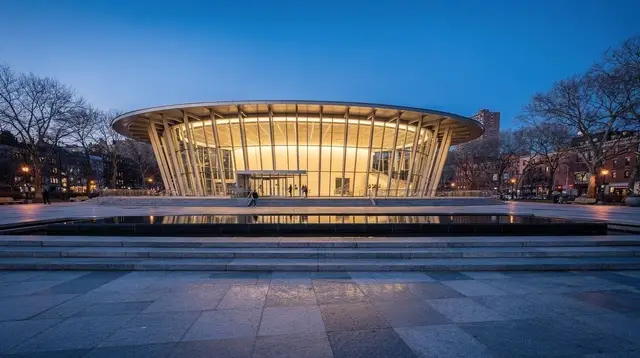
GetYourGuide does not provide a product photo for this activity — the image shows the meeting point, photographed by us.