Greenwich Village Walking Tour: Literary and Bohemian History
What does a Greenwich Village walking tour actually cover?
A guided walk of roughly 2 to 2.5 hours and 2-3 km, tracing the neighborhood's literary and bohemian history around Washington Square Park, Bleecker Street, and sites tied to 20th-century writers and musicians. Tickets generally run $20-30 per adult; Washington Square Park itself is a free public space at all times, independent of the tour price.
Why Greenwich Village rewards a guided walk
Greenwich Village is one of the few Manhattan neighborhoods where the street pattern itself tells a story. Below Houston Street, the numbered grid imposed on the rest of the island in 1811 simply doesn’t apply — the Village kept its older, winding lanes, many dating to when this was farmland and small estates well outside the city’s original boundaries. That irregular layout is part of why the neighborhood became, over the 20th century, a magnet for writers, poets, musicians and anyone who wanted to live somewhere that felt apart from grid-bound Manhattan.
A guided walking tour of the Greenwich Village area is less about ticking off a list of sights and more about narrative: which building a poet lived in before they were famous, which basement club hosted a musician’s first real audience, which square became a gathering point for protest and performance alike. Doing this alone with a guidebook is possible, but a lot of what makes the Village’s history interesting is invisible from the sidewalk unless someone points it out — a plaque easy to miss, a facade that looks unremarkable but hid decades of creative life inside.
What the walk actually covers
The standard route runs about 2 to 2.5 hours and 2 to 3 km, starting or passing through Washington Square Park, then working along and around Bleecker Street and the smaller residential lanes that branch off it. Along the way, guides typically point out sites connected to 20th-century literary and music history — homes and haunts tied to poets, novelists, folk musicians and jazz players who passed through or lived in the neighborhood across different decades, plus former coffeehouses and clubs that shaped the Village’s reputation as a bohemian center.
The pace is deliberately unhurried. This is a storytelling walk, not a fitness route — expect frequent stops of a few minutes each while the guide talks, with the walking itself covering relatively short distances between stops. That said, the ground underfoot is a real consideration: several blocks still have old cobblestone or uneven brick paving, and the terrain has genuine dips and rises in places, which makes comfortable, sturdy shoes worth prioritizing over anything else you pack for the day.
What guides tend to point out along the way
Because the Village’s history is layered rather than concentrated in one building or block, guides typically move through the neighborhood pointing out a mix of things: former residences tied to writers and poets who lived here across different decades, storefronts that used to be coffeehouses or small clubs where folk and jazz musicians played early sets, and quieter residential lanes that look much as they did generations ago because the neighborhood was never redeveloped on the scale of Midtown or Lower Manhattan. None of this requires stepping inside anywhere — the value is in the guide connecting a building’s unremarkable present-day facade to what happened behind it decades earlier, which is exactly the kind of detail that’s easy to walk past without knowing to look for it.
The route also touches on why the Village became a magnet for creative communities in the first place: cheap rents in older, smaller buildings, a layout that discouraged the kind of large-scale development happening elsewhere in Manhattan, and proximity to New York University, which has anchored a student and academic population in the neighborhood for generations. Guides often weave this context in between stops rather than as a separate lecture, so the walk reads more like a continuous story than a checklist of addresses.
Washington Square Park: free, always
One point worth being clear about before booking: Washington Square Park is a public park, free to enter at any hour, every day of the year, entirely independent of whether you’re on a paid walking tour. The tour’s ticket price — generally in the $20-30 per adult range — covers the guide’s time and expertise, the narrative and the route, not admission to the park, since none is required. If you only want to see the park’s iconic arch, the fountain and the general scene of NYU students, chess players and street performers, you can do that for free, any time, with no ticket at all.
What the guided walk adds is context: why the park exists where it does, what stood there before it was a park, and how it became a natural gathering point for the writers, folk musicians and activists whose history the tour traces through the surrounding blocks.
Group size and what “standard tour” means
These are group tours, typically running with 10 to 20 participants at the standard listed price. That’s worth knowing going in: you’ll be walking and listening alongside other travelers, not getting a guide’s undivided attention. If a fully private, just-you-and-a-guide experience is what you’re after, that’s generally a separate, more expensive product where operators offer it — it is not what the standard per-person ticket price buys. If group size matters to your comfort with the tour, checking listing details for maximum group size before booking is worth the extra minute.
What this tour is not
To set expectations clearly: a standard Greenwich Village walking tour does not typically include entry to any museum, historic house or other paid indoor attraction, unless that stop is explicitly named on your specific ticket. Guides work from the sidewalk and public spaces — pointing out a building’s history from outside it — rather than booking group entry into ticketed sites along the way. If an interior visit matters to you, check the exact ticket description rather than assuming it’s bundled in.
It’s also worth being realistic about crowds. Greenwich Village sits next to New York University, and weekend afternoons — Saturday especially — are consistently one of the busiest windows for foot traffic in the neighborhood, layering tourist crowds on top of a large resident student population. A guided tour on a Saturday afternoon will not be a quiet, uncrowded experience; if you’re hoping for that, an early weekday morning slot is a more realistic bet, and even then, expect other pedestrians and open storefronts rather than empty streets.
Accessibility: hilly and unevenly paved in places
Greenwich Village is not flat, and it is not uniformly accessible. Parts of the route sit on genuine slopes, and multiple blocks retain older cobblestone or brick sidewalks that are uneven underfoot, which makes some stretches difficult or impassable for wheelchair users and anyone with mobility limitations. Anyone with accessibility needs should contact the specific tour operator ahead of booking to ask about the exact route and whether an alternative path exists — this is not a neighborhood where a single blanket assurance (“it’s all accessible”) is reliable, and it’s better to confirm details directly than to discover a problem mid-walk.
Practical comparison: joining a tour vs. exploring alone
| Guided walking tour | Self-guided exploration | |
|---|---|---|
| Typical cost | $20-30 per adult | Free (Washington Square Park itself always free) |
| Duration | 2-2.5 hours, fixed route | Flexible, your own pace |
| Group size | Usually 10-20 people | Solo or your own group |
| Historical context | Guide narrates literary/music history | Requires your own research beforehand |
| Interior access | Not included unless stated on ticket | N/A — same limitation applies |
| Best for | First-time visitors wanting the backstory | Repeat visitors, or those short on time/budget |
Where the Village fits into a wider visit
Greenwich Village sits within easy reach of several other Manhattan neighborhoods worth combining into the same day. To the south, SoHo and Chinatown offer a shift from literary history to shopping streets and food; a SoHo/Chinatown walking tour pairs naturally with a morning in the Village. To the north, the High Line and Chelsea make for a scenic, elevated contrast, covered in the High Line and Chelsea walking tour.
If your focus is specifically on the Village’s cultural footprint in film and television, the Friends-inspired Greenwich Village tour covers similar streets from a different angle, and travelers curious about the neighborhood’s after-dark reputation might look at the Greenwich Village ghost tour or the Prohibition-era speakeasy bar crawl.
For food alongside history, the Greenwich Village food tour and the nearby Chinatown and Little Italy food walk both fit well either before or after a literary walking tour, since neither overlaps heavily on route. And if you’re building out a broader Manhattan itinerary, the Manhattan highlights and Greenwich Village combined tour — distinct from the standalone Village walk — folds in additional neighborhoods for travelers with less time to spend.
a guided walk through the Village’s bohemian and literary history is the most direct way to get this context in one outing. Travelers more interested in the neighborhood’s LGBTQ+ history specifically should look at a walking tour focused on Greenwich Village’s LGBTQ+ Pride history, which covers different sites and stories from the same streets. For a broader introduction that folds the Village into a wider Manhattan overview, a combined Manhattan highlights and Greenwich Village tour is worth considering, and French-speaking travelers can look at a jazz history walking tour of Greenwich Village offered in French or English for a music-focused angle on the same neighborhood.
Food and coffee along the route
The Village is dense with small cafes, bakeries and restaurants, many occupying the same kind of older, human-scaled buildings the walking tour is built around. A coffee before the tour starts near Washington Square Park is an easy way to fuel up, and since the standard walking tour doesn’t build in a meal stop, saving a proper meal for afterward — rather than trying to fit one into the 2-2.5 hour window — tends to work better in practice. Travelers who want the neighborhood’s food history covered with the same level of narrative detail as its literary history can look at a Greenwich Village food tour, which runs as a separate, tasting-focused itinerary rather than an add-on to the walking tour.
For those who prefer to explore independently after a guided walk, the smaller streets branching off Bleecker Street hold a mix of long-running restaurants and newer spots, and the neighborhood rewards wandering without a fixed plan once the tour itself has ended.
If you have more time in the neighborhood — or the city
A single Greenwich Village walking tour covers a specific slice of the neighborhood’s history, and several other angles on the same streets are worth knowing about if the literary and bohemian focus isn’t the only thing you’re after. Travelers drawn to the neighborhood’s after-dark reputation have a Greenwich Village ghost tour covering a different set of stories from many of the same blocks, typically run in the evening rather than during the day.
If your trip extends beyond the Village itself, a guided Central Park walking tour is a useful comparison point — a very different kind of walk, focused on landscape and design history rather than street-level neighborhood history, and easily reached from the Village by subway. Similarly, a SoHo and Chinatown walking tour picks up just a few blocks south and swaps literary history for architecture, shopping streets and food culture, making it a natural half-day pairing with a morning spent in the Village.
Beyond guided tours, the Financial District and Lower Manhattan sit further south along the same general subway lines, while uptown options like the Museum Mile stretch of the Upper East Side and Harlem’s history offer a longer subway ride but a similarly narrative-driven approach to neighborhood history, if that style of walking tour is what you’re after elsewhere in the city.
When to go
Weekday mornings are the quietest window for this walk — foot traffic is lighter, and the streets feel closer to how a resident of the neighborhood experiences them day to day. Spring and autumn bring the most comfortable walking temperatures; summer in New York runs hot and humid, which matters more on a walking tour than on most other activities since there’s no air conditioning between stops. Winter is workable too, with the benefit of fewer crowds, though shorter daylight hours mean checking your tour’s start time against sunset if you want good light for photos along the route.
Whatever the season, book with realistic expectations about crowd levels: this is a genuinely popular neighborhood, close to a major university, in one of the most visited cities in the world, and a quiet, empty version of Bleecker Street on a Saturday afternoon simply isn’t something any tour — guided or self-directed — can promise.
Getting there and getting around
The Village is well served by several subway lines, with the West 4th Street and Christopher Street stations both landing you close to Washington Square Park and the surrounding blocks. Since the subway runs 24/7, arriving for an early tour start is straightforward regardless of the day of the week. If you’re combining this walk with other Manhattan sightseeing, the neighborhood’s central location makes it easy to continue on foot or by a short subway ride to nearby areas covered elsewhere in this guide.
Walking Tours
Verified deep-linked GetYourGuide tours. Book through these links and we earn a small commission at no cost to you.
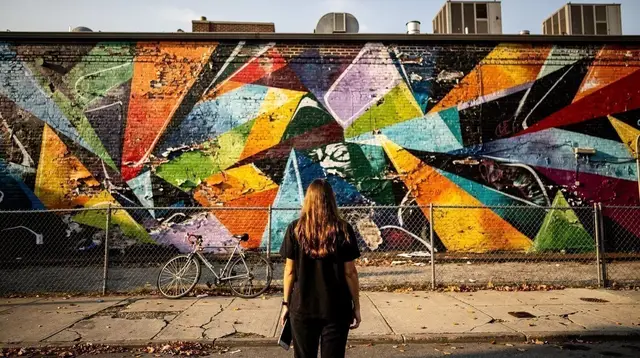
GetYourGuide does not provide a product photo for this activity — the image shows the meeting point, photographed by us.