9/11 Memorial & Museum: Tickets, Hours and What to Know Before You Go
Is the 9/11 Memorial free, and do I need a ticket for the museum?
The outdoor memorial plaza, with its two reflecting pools, is free and open to the public with no ticket required. The 9/11 Memorial Museum, located below ground, requires a paid, timed-entry ticket that should be booked in advance, especially in busy periods.
Understanding the two parts of the site
The 9/11 Memorial and Museum in Lower Manhattan is made up of two distinct spaces that visitors regularly confuse, and getting this distinction right matters before you plan anything else. The outdoor memorial plaza sits at street level, occupying the footprints of the original Twin Towers. Here, two enormous reflecting pools, each nearly an acre across, are lined with the names of everyone who died in the attacks of September 11, 2001, and in the earlier 1993 bombing of the World Trade Center. This plaza is free and open to the public, with no ticket, no reservation and no line to join. You can walk up to the pools at almost any hour the plaza is open, pause, and leave, at your own pace.
The museum is a different matter entirely. It sits below ground, beneath the plaza, and holds the physical remains of the towers’ structure, recovered artifacts, recordings, photographs and a detailed historical exhibition. Entry to the museum requires a paid, timed-entry ticket booked for a specific arrival window. There is no walk-up general admission that bypasses this system, and there is no scenario in which the museum itself is free to enter for a typical visitor. Some limited free-admission windows exist for specific groups, such as active military or on certain designated evenings, and these change from year to year, so they should never be assumed or promised to any visitor planning a trip.
If your plan is simply to see the reflecting pools and pay your respects at the footprints of the towers, you do not need to buy anything. If you want to understand the history in depth, through the recovered steel, the wall of photographs of the victims, and the timeline of that morning, you need the paid museum ticket, purchased ahead of your visit.
Getting there: location and nearest subway stations
The memorial and museum sit in the Financial District, on the site of the original World Trade Center complex, close to One World Trade Center and the Oculus transit hub. Two subway stations put you right at the site:
| Station | Line | Notes |
|---|---|---|
| Chambers Street | E | Exits close to the memorial’s north side |
| WTC Cortlandt | E | Rebuilt station directly beneath the site |
| Fulton Street | A, C, J, Z, 2, 3, 4, 5 | A short walk east, useful if transferring |
| Park Place | 2, 3 | A short walk north |
The area is walkable from most of Lower Manhattan, including the Financial District’s older streets and the ferry terminals along the harbor, so many visitors combine a memorial visit with a walk toward the Staten Island Ferry terminal or the Financial District’s historic core on the same outing, without needing to change transport mode at all.
Hours and how long to plan for
The outdoor plaza generally opens early and stays open into the evening, with hours that shift slightly by season, so check the current posted hours before an early-morning or late-evening visit rather than assuming a fixed schedule. The museum keeps shorter hours than the plaza and operates on the timed-entry system already described, meaning your ticket is valid for a specific entry window rather than the full day.
Most visitors spend between 1.5 and 2 hours inside the museum. The historical exhibition, which walks through the morning of the attacks in close detail, is dense and emotionally demanding, and many people take longer there than they expect. If you also want to see the memorial exhibition, which focuses on the individual victims through photographs and personal objects, budget closer to 2.5 hours in total. The outdoor plaza itself takes as little as 15 to 20 minutes to walk through both pools, though most visitors linger longer than that.
Because the museum entry is timed, arriving well before your slot is not necessary, but arriving late can mean losing your place in that window, so build in extra time for the security screening described below.
Booking tickets and what they include
Museum tickets are timed and should be booked in advance, particularly around weekends, school holidays, the summer months and the anniversary period in early September, when demand rises sharply and same-day slots can be limited or unavailable. A combined visit that pairs the memorial and museum with a guided walk through the surrounding Financial District is also a practical option if you would rather have context from a local guide alongside your ticket.
A walking tour through the World Trade Center site with museum admission included bundles entry with a guide who can explain the surrounding rebuilt streets before you go below ground. For visitors who prefer to skip the ticket counter and go straight to entry, timed museum admission booked in advance secures your slot ahead of time.
Some visitors prefer a guided experience that adds context to the memorial plaza itself, without necessarily including the museum. A guided tour of the memorial site with optional museum entry lets you choose whether to add the underground exhibition once you see how much time you have. Others combine the memorial with a broader look at Lower Manhattan’s financial and historic streets; a walking tour covering Wall Street and the 9/11 Memorial is one way to see both in a single guided outing.
Whichever option you choose, none of these tickets includes access to One World Observatory, covered in more detail below, and none of them promises free museum entry — the museum is a paid attraction for the overwhelming majority of visitors, regardless of how the ticket is packaged or bundled.
Security and what to bring
Entry to the museum involves screening similar to airport security: bags are scanned, and visitors pass through metal detectors before entering. Small bags and backpacks are generally permitted once screened, but large bags, suitcases and bulky luggage are not allowed inside, and there is limited on-site storage. If you are arriving from an airport or a hotel checkout with luggage in tow, it is worth resolving that separately beforehand — a Manhattan luggage storage service or a facility near Penn Station or Grand Central can hold bags for the day so you arrive at the memorial unencumbered.
Photography is permitted in most areas of the museum, though visitors are asked to be mindful of others, particularly near the more difficult sections of the historical exhibition. Certain areas, including a room containing unidentified remains, are set apart and treated with particular care; access to that space is limited to family members of victims.
What’s inside the museum
The museum’s main historical exhibition unfolds largely underground, at the level of the towers’ original foundations, and moves chronologically through the morning of September 11, 2001: the first reports, the collapse of both towers, and the response that followed in the days after. Alongside this timeline sit recovered structural fragments — twisted steel columns, a crushed fire truck, a stairwell that survivors used to escape — displayed at a scale that photographs of the site rarely convey. A separate memorial exhibition, arranged around a wall of photographs of everyone who died, lets visitors look up individual victims and hear brief recorded remembrances from family members. The two exhibitions sit close together but are distinct in tone: the historical exhibition explains what happened, while the memorial exhibition is about who was lost.
Because the underground galleries are large and the subject matter dense, many visitors find it easier to see the historical exhibition first, while attention is fresh, and treat the memorial exhibition as a slower, quieter close to the visit. There is no required order, and the layout allows visitors to double back if they want to revisit a section.
Accessibility and getting around the site
Both the outdoor plaza and the museum are built to be accessible: the plaza’s paths are level and paved, and the museum uses elevators rather than stairs to move between its underground levels, so a visit does not require navigating long staircases. Wheelchairs are available on a limited basis at the museum entrance for visitors who need one, though arriving with your own is generally more reliable during busy periods. Benches are placed at intervals along the plaza’s edge, useful given how many visitors choose to sit by the reflecting pools rather than simply walk past them.
If you are coming from elsewhere in the city and relying on the subway, it is worth checking which stations near the site have step-free access before you travel, since not every stop in Lower Manhattan does; the subway’s accessible-stations guide covers this for the system as a whole.
Best time of day to go
Early morning, close to opening, is generally the quietest time at both the plaza and the museum, before tour groups and day-trippers from the wider city arrive. Midday through mid-afternoon tends to be the busiest stretch, particularly in summer and around the September anniversary, when both the security line and the plaza itself fill up. Visiting the plaza at dusk, once the day’s crowds have thinned, is also worth considering if your schedule allows it — the reflecting pools take on a different character as the light changes, and the site is calmer without losing any of its accessibility, since the plaza’s hours extend well into the evening.
If you are trying to fit the memorial into a tightly packed first day in the city, our one-day Manhattan essentials itinerary places it alongside the neighborhood’s other major sights in a realistic order, rather than treating it as a rushed add-on at the end of the day.
What the ticket does not include
It is worth being direct about this, because the confusion is common and understandable given how close the two sites stand to each other. One World Trade Center, the tallest building in the Western Hemisphere, houses One World Observatory, an observation deck near the top of the tower. This is an entirely separate attraction, run separately, ticketed separately, and physically entered from a different location than the memorial and museum.
A memorial or museum ticket does not grant access to the observatory, and an observatory ticket does not grant access to the museum. Visitors who want to do both should plan and book each one individually. For a side-by-side look at how the two experiences differ and whether you need both, see our comparison of the 9/11 Memorial and One World Observatory.
A note on tone and what this place is
The memorial and museum are not an entertainment attraction, and they are not marketed or experienced as one. The museum holds the remains of people who died on September 11, 2001, and in the 1993 bombing, and a dedicated repository at the site is reserved for unidentified remains, cared for under the oversight of the medical examiner’s office and accessible only to victims’ families.
Many visitors, including native New Yorkers, find the experience emotionally difficult, and that is an appropriate and common reaction, not a sign that something has gone wrong with the visit. If you are traveling with children, it is worth reading ahead about the content before deciding whether the museum is right for their age, and know that the free outdoor plaza is itself a complete and respectful way to pay your respects without going underground at all.
For visitors who would like a guide to walk them through the history at a considered pace, rather than moving through the museum unaccompanied, a guided memorial tour with optional museum and One World access pairs a knowledgeable guide with flexible entry options, useful if you are unsure in advance how much you want to see.
Combining your visit with the rest of Lower Manhattan
Because the memorial sits inside the Financial District, many visitors pair it with a walk past Wall Street, the Charging Bull statue, and the harbor’s edge toward the Statue of Liberty and Ellis Island ferries.
A combined tour taking in Charging Bull, Wall Street, the 9/11 Memorial and One World tickets is built around exactly this route, useful if you want to see the neighborhood’s key sites in one guided morning or afternoon without planning the order yourself. For a more focused, official framing of the memorial’s history, a official guided tour of the 9/11 Memorial sticks closely to the plaza and its history rather than folding in the wider neighborhood.
If your time in Lower Manhattan is limited to a single morning, the free plaza alone is enough to pay respects and understand the site’s layout; if you have half a day, adding the museum gives a far fuller picture of the events themselves. Either way, treat the memorial and museum as a place to move through slowly, not a stop to check off quickly on the way to somewhere else.
Planning takeaways
- The outdoor plaza and reflecting pools are free, always open to the public, and need no ticket.
- The museum is a separate, paid, timed-entry attraction; there is no general free admission for typical visitors.
- Chambers Street and WTC Cortlandt, both on the E line, sit closest to the site.
- Plan for 1.5 to 2 hours inside the museum, more if you visit both its exhibitions in full.
- Book museum tickets ahead of time, especially around weekends, holidays and the September anniversary period.
- Security screening applies before entry; leave large bags and luggage elsewhere beforehand.
- One World Observatory is a completely separate attraction with its own ticket, not included with memorial or museum admission.
- This is a memorial site holding human remains, not an entertainment venue; plan your visit, and your children’s visit, accordingly.
9/11 Memorial & Museum
Verified deep-linked GetYourGuide tours. Book through these links and we earn a small commission at no cost to you.
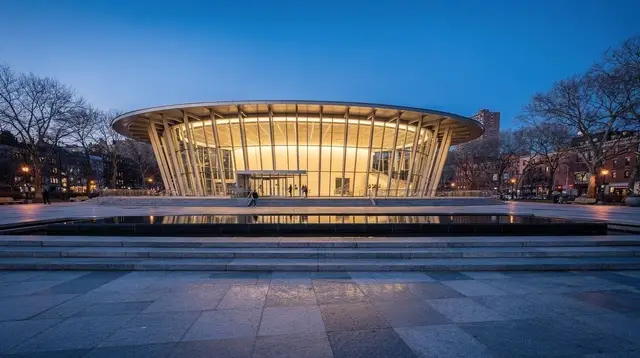
GetYourGuide does not provide a product photo for this activity — the image shows the meeting point, photographed by us.