SUMMIT One Vanderbilt: Complete Guide to Tickets and What to Expect
What is SUMMIT One Vanderbilt and how is it different from other NYC observation decks?
SUMMIT One Vanderbilt is an immersive art experience near the top of One Vanderbilt, next to Grand Central Terminal, built around mirrored rooms, digital art installations and limited outdoor terraces rather than a classic open-air, 360-degree view. Its glass-box Ascent experience is a separate, additional ticket, and pricing is entirely independent of every other observatory in the city.
A different kind of view above Midtown
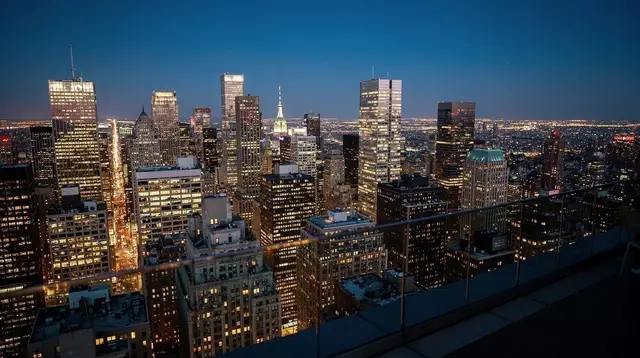
Walk into SUMMIT One Vanderbilt expecting the Empire State Building’s classic open-air deck, and it will feel like a surprise. SUMMIT is built into the upper floors of One Vanderbilt, the tower rising directly beside Grand Central Terminal on East 42nd Street, and it is designed as an art experience first, an observation deck second. Mirrored rooms multiply the city skyline into fractured, kaleidoscopic reflections. Digital art installations shift and pulse across walls and floors.
There are outdoor terraces, but they are limited in extent, not a continuous open-air walkway circling the entire building the way you get at the Empire State Building or Top of the Rock. Booking in without understanding that distinction is the single most common reason visitors leave disappointed, so this guide sets out exactly what SUMMIT is, what it isn’t, and how to plan a visit that matches what it actually offers.
What SUMMIT One Vanderbilt actually is
SUMMIT occupies several of the top floors of One Vanderbilt, a tower that opened in 2020 next to Grand Central Terminal. Rather than a single glassed-in observation floor, the visit moves through a sequence of rooms: mirrored chambers that reflect Manhattan’s skyline into repeating fragments, rooms filled with reflective spheres you can walk among, and large-scale digital art projected across surfaces that respond to movement and light. Some rooms are genuinely disorienting in a deliberate, playful way — mirrors on the floor as well as the walls and ceiling make it hard to judge where the room actually ends.
Outdoor space exists, but it is limited to specific terrace levels rather than an uninterrupted 360-degree walkway. Those terraces do offer real, unobstructed views over Midtown and toward Central Park, the East River and beyond, but visitors expecting to walk a full circuit outdoors, as at the Empire State Building’s 86th floor deck, will find far less outdoor square footage here.
This is the trade the ticket makes: SUMMIT is not competing with traditional observatories on raw outdoor viewing area. It is a distinct, art-led format that happens to sit roughly 1,000 feet above Midtown, and it is worth treating as its own attraction rather than a like-for-like substitute for the Empire State Building or One World Observatory.
Ascent: the glass box, and why it costs extra
The experience most photographed from SUMMIT is Ascent — a transparent glass box, roughly the size of a small elevator car, that extends out from the edge of the building and lifts a small group of visitors up and out over open air, with nothing but glass between them and the drop to the street far below.
Ascent is not included in the standard SUMMIT admission ticket. It is sold as a separate, additional ticket, purchased on top of general entry, and it has its own limited capacity and its own timed slot within your visit. Because the box holds only a few people per ride and each ride takes a few minutes, Ascent slots are considerably more limited than general SUMMIT admission and can sell out independently, even on a day when standard tickets are still available. If Ascent is the reason you want to visit, check its availability specifically when booking rather than assuming it comes bundled in.
Booking: timed entry and what tickets include
Every SUMMIT visit is sold as a timed-entry ticket: you choose a date and an arrival window, and you’re expected to arrive within it, similar to the Statue of Liberty ferry system or the 9/11 Memorial Museum. Standard admission includes the full sequence of mirrored rooms, digital art installations and the accessible outdoor terrace levels. It does not include Ascent, and it does not include admission to any other observatory or attraction in the city — there is no official combined ticket linking SUMMIT automatically to the Empire State Building, Top of the Rock, or any other deck.
A practical comparison of ticket approaches:
| Ticket type | What’s included | Best for |
|---|---|---|
| Standard SUMMIT One Vanderbilt entry | Mirrored rooms, digital art installations, accessible terraces | First-time visitors focused on the art experience |
| SUMMIT + Ascent | Standard entry plus the glass box add-on | Visitors specifically wanting the glass-box photo and thrill |
| SUMMIT + guided tour | Standard entry plus a guide covering the building and Midtown context | Visitors who want context on One Vanderbilt and the surrounding district |
| SUMMIT + Grand Central Terminal | Standard entry plus a guided look at the terminal next door | Visitors combining two Midtown landmarks in one outing |
For straightforward entry without add-ons, booking standard SUMMIT One Vanderbilt tickets in advance secures a timed slot without the uncertainty of walk-up availability. Visitors who’d rather skip ticket-counter lines and have someone explain the installations along the way often prefer a skip-the-line guided SUMMIT visit, which pairs faster entry with commentary on the art and the building.
Because SUMMIT sits directly against Grand Central Terminal, several tickets bundle the two together. A combined SUMMIT and Grand Central Terminal tour covers both the mirrored rooms above and the terminal’s landmark Main Concourse below, while a SUMMIT ticket paired with a Grand Central tour offers a similar combination for visitors who want both without booking two separate line-ups.
For a broader look at the neighborhood beyond the tower itself, a Midtown Manhattan guided tour that includes SUMMIT entry folds the visit into a wider walk past Grand Central, the New York Public Library and Bryant Park.
Getting there and when to go
One Vanderbilt sits directly beside Grand Central Terminal at East 42nd Street, making it one of the easiest Midtown attractions to reach — nearly every subway line that stops at Grand Central puts you at the building’s door. From Times Square, it’s a short walk east along 42nd Street, easily combined with an afternoon covering both landmarks.
Sunset slots are the most requested and sell out first, since the mirrored rooms and outdoor terraces both take on a different character as the light changes and the city lights come up. Weekday mornings and early afternoons tend to be the quietest, with more room to move through the mirrored spaces without crowds in every reflection. Because tickets are timed and capacity-limited by design, booking at least several days ahead is sensible in high season (spring and summer, plus the December holiday period), and booking Ascent separately as early as possible if that’s part of the plan.
SUMMIT compared with other Midtown observatories
Visitors choosing between Midtown’s observation options are often comparing formats that aren’t really equivalent. The table below sets out the practical differences:
| Feature | SUMMIT One Vanderbilt | Empire State Building | Top of the Rock |
|---|---|---|---|
| Primary format | Indoor mirrored rooms and digital art | Open-air deck, full circumference | Open-air deck, full circumference |
| Outdoor viewing | Limited terraces only | Continuous outdoor walkway | Continuous outdoor walkway |
| Signature extra | Ascent glass box (separate ticket) | Higher 102nd-floor deck (separate ticket) | Multiple tiers, no separate add-on |
| Location | Beside Grand Central Terminal | 34th Street | Rockefeller Center |
| Combined ticket with other decks | None official | None official | None official |
None of the three is strictly better — they’re different products. Visitors who specifically want a wraparound skyline photograph in open air are better served by the Empire State Building or Top of the Rock; visitors drawn to art installations, mirrors and a more unusual, indoor-first format are the natural audience for SUMMIT. A side-by-side look at all of Midtown’s towers is covered in more detail in the guide comparing Empire State Building and One World Observatory, and a wider survey of every deck in the city sits in the best observation deck comparison.
Pairing SUMMIT with the rest of Midtown
Because SUMMIT sits inside the Midtown core, it pairs naturally with a day built around Grand Central Terminal, the New York Public Library, Bryant Park and Times Square. Visitors staying in the area for a longer stint often build it into a broader Midtown-focused day from the three-day classic New York itinerary, or fold it into a single-day plan alongside the one-day Manhattan essentials itinerary.
Families weighing SUMMIT against other options should note that the mirrored rooms and digital art tend to appeal strongly to kids and teenagers, often more directly than a traditional static view; it’s covered as one option among several family-friendly Midtown stops in the New York City with kids itinerary. Visitors planning a broader Midtown and greater New York itinerary that includes day trips can find a fuller regional picture in the seven-day first-time USA itinerary.
For travelers extending their New York stay outward, Long Island’s East End wine country is a popular full-day contrast to Midtown’s density. An East End wine tour from New York City or a more intimate private luxury winery trip through Long Island both make for a straightforward day away from Manhattan’s towers, best planned on a separate day from a SUMMIT visit rather than the same one, given the travel time each way.
Practical tips before you book
Arrive at the building itself with a little buffer before your timed slot — security screening similar to other Manhattan towers is required before entering the elevators, and lines at the base of One Vanderbilt can add a few minutes even with a valid timed ticket. Wear shoes you’re comfortable standing in for an hour or more, since the mirrored rooms and terraces involve continuous walking and standing rather than seating. Camera phones handle the mirrored rooms well, but the constantly shifting reflections mean it’s worth taking a moment to simply look rather than only shoot.
If Ascent is part of the plan, expect a separate queue and a short safety briefing before boarding the glass box, and know that capacity per group is small, so waits can build even with a booked slot. Finally, treat any listing promising a combined SUMMIT and Empire State Building (or other observatory) ticket with some skepticism — no official bundle currently links SUMMIT automatically to another deck’s admission, so any such offer is a third-party package worth reading closely before buying.
Frequently asked questions about visiting SUMMIT One Vanderbilt
Is SUMMIT One Vanderbilt the same kind of experience as the Empire State Building or Top of the Rock?
No. The Empire State Building and Top of the Rock are classic open-air observation decks with a continuous outdoor view around the full circumference of the building. SUMMIT One Vanderbilt is primarily an indoor art and mirror installation, with only limited outdoor terrace space, so the visual experience is very different even though all three buildings sit in Midtown.
Is the Ascent glass box included in the standard SUMMIT ticket?
No. Ascent, the glass elevator-like box that extends out from the building’s edge, is a separate, additional ticket on top of standard SUMMIT admission. It is not automatically included, and it can sell out on its own independent of general admission.
Do I need a timed ticket for SUMMIT One Vanderbilt?
Yes. Entry is sold in timed slots, and visitors are expected to arrive within their booked window. Popular slots, especially sunset and weekend afternoons, sell out days or weeks ahead in busy seasons.
Can I see a full 360-degree outdoor view from SUMMIT One Vanderbilt?
Not continuously. The experience includes some outdoor terrace levels, but the bulk of SUMMIT is indoor, with mirrored surfaces and digital art rather than an uninterrupted open-air view on every side, unlike the Empire State Building or Top of the Rock.
Is there a combined ticket with the Empire State Building or another observatory?
No official combined ticket links SUMMIT One Vanderbilt automatically with another observatory’s admission. Each attraction is priced and ticketed separately, and any bundle sold by a third party should be checked carefully for exactly what it includes.
Where exactly is SUMMIT One Vanderbilt located?
It sits near the top of One Vanderbilt, a tower directly beside Grand Central Terminal on East 42nd Street in Midtown Manhattan, making it easy to combine with a visit to the terminal itself.
How long should I plan to spend at SUMMIT One Vanderbilt?
Most visitors spend 60 to 90 minutes moving through the mirrored rooms and installations, longer if adding the Ascent glass box, which typically has its own separate queue and timed entry within the visit.
Observation Decks
Verified deep-linked GetYourGuide tours. Book through these links and we earn a small commission at no cost to you.
GetYourGuide does not provide a product photo for this activity — the image shows the meeting point, photographed by us.
9/11 Ground Zero Tour with Optional One World Observatory

Private Downtown All Access One World Observatory 9/11 Memorial Statue of Liberty and Ellis Island