Empire State Building vs One World Observatory: Which to Choose
Should I go up the Empire State Building or the One World Observatory?
Choose One World Observatory if you want Manhattan's skyline with the Empire State Building visible in your photo. Choose the Empire State Building if you want the classic postcard view centered on Midtown and Central Park, with the building itself part of the skyline seen from elsewhere. They are not interchangeable choices.
New York has two towers that visitors debate endlessly, and most guides duck the question by saying “it depends” and leaving you no closer to an answer. This one won’t. The Empire State Building and One World Observatory are both worth going up, but they are not the same experience, and for a single visit with limited time, one of them fits your trip better than the other. The decision comes down to a genuinely simple test: do you want your photo to include the Empire State Building, or do you want the classic Midtown skyline view that has appeared on a century of New York postcards? Read on for exactly what each building offers, what each view actually looks like, and which one to book.
The two buildings, side by side
Both towers sit in Manhattan, but at opposite ends of the island, and that geography is the whole reason their views differ so much.
The Empire State Building rises in Midtown, on Fifth Avenue at 34th Street, in the thick of the Midtown and Times Square area. It opened in 1931 and held the title of world’s tallest building for four decades. Today it reaches 443 metres (1,454 feet) including its antenna, with two separate observation levels: the 86th floor, which has both an enclosed indoor gallery and an open-air outdoor deck running the full perimeter, and the 102nd floor, a smaller, fully enclosed deck about 25 metres higher.
One World Observatory sits atop One World Trade Center, at the southern tip of the island in Lower Manhattan, next to the Statue of Liberty ferry terminals and the 9/11 Memorial. The tower itself is 541 metres (1,776 feet) to the tip of its antenna, a height chosen deliberately to echo 1776, the year of American independence. It is the tallest building in the Western Hemisphere, having overtaken the Empire State Building’s old title once it topped out. The observatory occupies the 100th, 101st and 102nd floors, all fully enclosed behind glass — there is no outdoor deck here at all.
| Empire State Building | One World Observatory | |
|---|---|---|
| Building height | 443m / 1,454ft | 541m / 1,776ft |
| Observation floors | 86th (indoor + outdoor) and 102nd (indoor) | 100th, 101st, 102nd (indoor only) |
| Outdoor viewing | Yes, on the 86th floor | No |
| Location | Midtown, Fifth Avenue at 34th St | Financial District, Lower Manhattan |
| Opened | 1931 | 2015 |
| Nearby attraction to pair with | Broadway, Central Park | 9/11 Memorial & Museum |
Tickets and pricing: what you’re actually buying
At the Empire State Building, the base ticket covers only the 86th floor. Going up to the 102nd floor requires either a combined ticket bought up front or an add-on purchased once you’re already at the 86th floor, so the two levels are priced and sold separately, but stackable in a single visit. Skip-the-line and early-access options exist for both, and they meaningfully cut the wait at busy times.
At One World Observatory, there is effectively one ticket tier for general admission covering all three observation floors as a single continuous visit, since they’re connected internally, plus optional upgrades such as flexible-date or priority-access tickets.
Neither building’s website sells GetYourGuide or Viator inventory directly, so bundled and skip-the-line options are worth comparing before you buy. For the fastest way to get a confirmed slot without hunting through official ticket tiers, Empire State Building tickets covering the observatory and museum bundle entry with the building’s small aviation and history exhibits.
If your Lower Manhattan plans already include 9/11 history, a Ground Zero walking tour with an optional One World Observatory upgrade is a practical way to combine the two without separately queuing for each.
The view: this is where the decision actually gets made
Here is the part most comparisons skip past, and it’s the part that matters most.
From the Empire State Building, you are standing in the middle of Midtown, looking out at the city around you. To the north, Central Park unrolls as a green rectangle with the Upper East and Upper West Sides framing it; to the south, the spire-dense blocks of the Flatiron District and Greenwich Village lead the eye down toward the distant towers of the Financial District and One World Trade Center on the horizon. This is the view that has defined New York’s skyline in film and photography for generations — but by definition, it does not include the Empire State Building itself, because you’re standing on top of it.
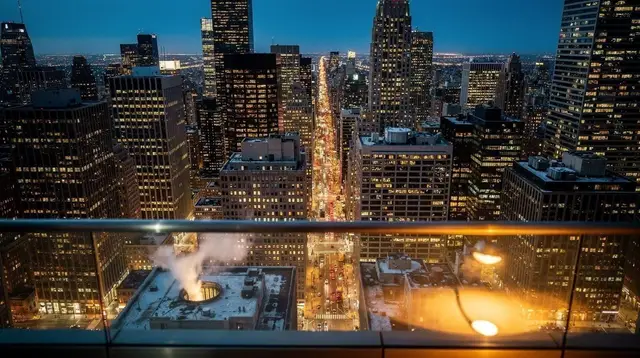
From One World Observatory, you are at the opposite end of the island, looking north across the entire length of Manhattan. Midtown’s cluster of towers, with the Empire State Building standing out clearly among them, fills the middle of the frame; Central Park is visible as a far-off strip of green beyond it. This is the view that includes the Empire State Building as a recognizable landmark in your photo — but it does not include One World Trade Center itself, for the same reason as above.
So the trade-off is exact and symmetrical: each building gives you a sweeping view of the other, plus everything around it, but never a view of itself.
The decision, made explicitly
If you want a photograph that includes the Empire State Building — the single most recognizable silhouette in the New York skyline — you need to be looking at it from somewhere else. Go to One World Observatory. It’s also the better choice if you’re already planning a Lower Manhattan afternoon around the 9/11 Memorial, the Statue of Liberty ferry, or the Financial District, since all three sit within walking distance of each other, and it’s the pick for anyone chasing the tallest-building bragging rights of the Western Hemisphere.
If you want the classic, historic, postcard view of Manhattan — the one with Central Park laid out ahead of you and the city’s texture spread in every direction, with the option of stepping outside onto an open-air deck to feel the height rather than just see it through glass — go to the Empire State Building. It’s also the practical choice if your day is centered on Midtown, Broadway or Central Park, since you won’t need to detour downtown for it, and it’s the only one of the two that offers outdoor viewing at all.
Do not treat this as a coin flip. A visitor planning to photograph the skyline for a scrapbook or social feed gets a measurably better shot from One World Observatory, because the Empire State Building is the single most identifiable element you can put in a New York skyline photo. A visitor who wants the view that generations of New Yorkers and travelers have actually meant when they picture “the view from the top of New York” should go up the Empire State Building itself, indoors and out.
If your schedule allows both
The two towers are roughly 20 to 25 minutes apart by subway, and their tickets are entirely independent, so nothing stops you from doing both — many first-timers do, usually on separate days rather than back to back, since each visit with security screening, elevators and time on the deck itself runs 60 to 90 minutes.
A natural pairing is One World Observatory in the same half-day as the 9/11 Memorial, since they sit steps apart, while the Empire State Building pairs naturally with an evening in Midtown — dinner, a walk to Times Square, or a Broadway show afterward. If you’re weighing a third option too, Top of the Rock at Rockefeller Center offers a Midtown view that, unlike the Empire State Building’s own deck, does include the Empire State Building in frame — worth knowing if photographing it matters more to you than height.
Crowds, timing and getting the most out of either deck
Both towers sell timed-entry tickets, and at both, sunset slots sell out first and fastest, often days or weeks ahead in peak season (April through October, and around the December holidays). Early morning, right at opening, is the quietest and clearest window at both buildings, with the added benefit of softer light for photos. Weekday visits generally run less crowded than weekends at either location.
Weather affects the two differently. Because the Empire State Building’s 86th floor is partly outdoors, wind, rain or extreme cold change that visit meaningfully, and on the rare day it’s closed for weather, only the indoor 86th-floor gallery and the 102nd floor remain open. One World Observatory, being fully enclosed, is unaffected by weather in the same way, though heavy fog or low cloud can obscure the view at either building regardless of ticket type — check forecasts before committing to a specific time slot if visibility matters to you.
Whichever tower you choose, arrive at least 15 to 20 minutes before your timed slot: airport-style security screening is standard at both, and lines build quickly in the final minutes before popular time windows.
Empire State Building vs One World Observatory: your questions answered
Which is taller, the Empire State Building or One World Trade Center?
One World Trade Center is taller. It reaches 541 metres (1,776 feet) to the tip of its antenna, making it the tallest building in the Western Hemisphere. The Empire State Building tops out at 443 metres (1,454 feet) including its antenna, and its main observation deck sits lower still, on the 86th floor.
Can I see the Empire State Building from One World Observatory?
Yes, clearly. One World Observatory sits far downtown, in the Financial District, so it looks north across the whole of Manhattan and the Empire State Building stands out prominently in the middle distance, along with Midtown’s other towers.
Can I see One World Trade Center from the Empire State Building?
Yes. From the Empire State Building’s observatories you can see One World Trade Center to the south, but it appears as one tower among the Lower Manhattan skyline rather than as a dramatic close subject, since it is roughly 6 kilometres away.
Which one has a better view of Central Park?
The Empire State Building. Its Midtown location puts Central Park almost directly north of the observation decks, clearly visible as a green rectangle. From One World Observatory, Central Park is much farther away and harder to pick out distinctly.
Is the 102nd floor of the Empire State Building worth the extra cost?
For most visitors, the 86th floor is enough: it is the only deck with open-air outdoor viewing and already delivers the full panorama. The 102nd floor adds roughly 25 metres of height and a fully enclosed, quieter viewing floor, which suits visitors who specifically want to say they went to the top or who want fewer crowds.
Does One World Observatory have an outdoor deck?
No. One World Observatory is fully enclosed behind floor-to-ceiling glass on the 100th, 101st and 102nd floors. If open-air viewing matters to you, the Empire State Building’s 86th-floor deck is the only one of the two that offers it.
Can I combine a visit to both towers in one trip?
Yes, and many first-time visitors do, since the tickets are entirely separate and the two buildings are about a 20 to 25 minute subway ride apart. Doing both on the same day is possible but tiring; splitting them across two days, or pairing One World Observatory with a 9/11 Memorial visit on the same afternoon, works better.
Are Empire State Building and One World Observatory tickets timed?
Both sell timed-entry tickets, and both strongly recommend booking ahead rather than arriving as a walk-up, particularly for sunset slots, which sell out first at both towers.
If you’re still deciding how these two fit into a broader New York itinerary, our full observation deck comparison weighs both against Top of the Rock and Summit One Vanderbilt, and our 9/11 Memorial vs One World Observatory guide breaks down how to plan a Lower Manhattan day that includes either. For a deeper look at each building on its own terms, see our dedicated Empire State Building observatory guide and One World Observatory guide.
Compare Tours
Verified deep-linked GetYourGuide tours. Book through these links and we earn a small commission at no cost to you.
GetYourGuide does not provide a product photo for this activity — the image shows the meeting point, photographed by us.