Arthur Avenue: The Bronx's Real Little Italy Food Tour
Is Arthur Avenue in the Bronx worth the trip from Manhattan?
Yes, but plan for it: it is 30-40 minutes from Midtown by subway plus a walk, not a quick hop like Brooklyn. The reward is a genuinely lived-in Italian-American food district with an indoor market, salumerias and bakeries that Manhattan's tourist-facing Little Italy no longer matches.
The Bronx’s other Little Italy
Ask most first-time visitors where to find New York’s Little Italy and they’ll point to Mulberry Street in Manhattan. That strip is worth a walk, but it has largely folded into the edges of Chinatown and runs mostly on tourist volume rather than a resident Italian-American community. Arthur Avenue, tucked into the Belmont section of the Bronx, is the neighborhood locals and longtime food writers actually mean when they say “real Little Italy.” It has never needed to perform Italian-ness for visitors, because the butchers, bakers and salumerias here have been serving the same families for generations.
That authenticity comes with a trade-off worth being honest about upfront: Arthur Avenue is not as easy to reach as Brooklyn’s Williamsburg or Manhattan’s Greenwich Village, and the blocks around it are not built for tourism. This guide covers what the area actually offers, exactly how to get there, and what to expect once you arrive, so you can decide whether the trip fits your itinerary and go in with realistic expectations.
What makes Arthur Avenue worth the trip
The heart of the district is a few blocks of Arthur Avenue and the cross streets around East 187th Street, packed with small, specialized food businesses rather than restaurants alone. You’ll find butchers still cutting meat to order, cheese shops making fresh mozzarella throughout the day, bakeries pulling bread and pastries from ovens that have run for decades, and pork stores hanging cured meats in the window. It is a working commercial district first, a destination second, which is exactly why it feels different from more polished food areas closer to Manhattan.
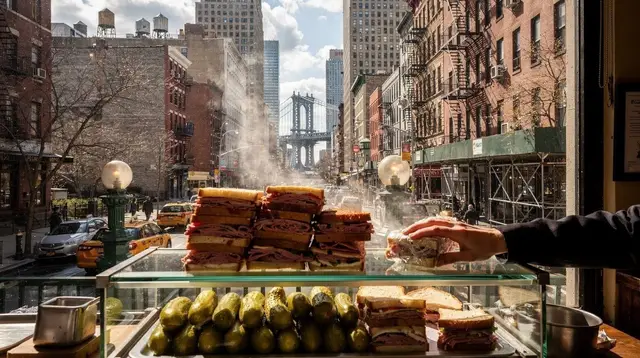
Unlike a single-purpose food hall, Arthur Avenue rewards wandering between separate storefronts: a butcher for the evening’s dinner, a bakery for dessert, a salumeria for a sandwich eaten standing at the counter. If you’d rather sample a wider cross-section of the city’s Italian-American food scene without the Bronx trip, a guided Italian food tasting tour covers multiple stops with a local guide doing the navigating and ordering for you.
The Arthur Avenue Retail Market
The single most efficient stop in the district is the Arthur Avenue Retail Market at 2344 Arthur Avenue, an indoor market hall that has operated in some form since the 1940s. Under one roof you’ll find independent vendors including butchers, a produce stand, a cigar-rolling stall, a coffee bar and prepared-food counters. Because it’s indoor and consolidated, it’s a sensible first stop if you’re short on time or visiting in poor weather, and a good orientation point before wandering the surrounding blocks.
The market runs on its own rhythm rather than tourist hours: expect it to be busiest around midday and quieter by mid-afternoon, and don’t expect extended evening hours the way you would at a Manhattan food hall built for after-work crowds.
What to eat, and where to start
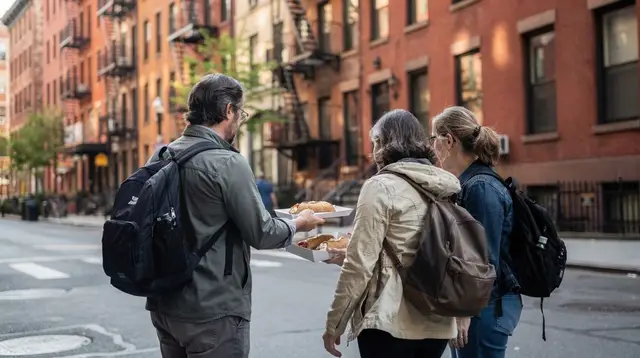
Arthur Avenue rewards a plan rather than aimless wandering, since the district’s real strength is depth across many small, specialized shops rather than one standout restaurant. A sensible first stop is the Retail Market itself, where you can walk the length of the hall, see what several vendors are offering that day, and get a feel for the district before committing to a sit-down meal. From there, most visitors build a loose circuit: a butcher counter for cured meats to taste on the spot, a cheese shop for fresh mozzarella made that morning, a bakery for bread or pastry, and a salumeria for a sandwich built to order and eaten standing at the counter rather than at a table.
This grazing approach is part of what separates Arthur Avenue from a conventional restaurant meal — you’re assembling a meal from several specialists rather than ordering off one menu, closer in spirit to how the neighborhood’s residents actually shop. If that appeals to you but the idea of sequencing five separate shop visits on your own feels like a lot to plan blind, a guided citywide food tour can show you how a well-run multi-stop tasting circuit works, even on a day you visit Arthur Avenue independently.
Sit-down dining is also part of the district’s draw: several long-running Italian restaurants line Arthur Avenue and the surrounding blocks, generally serving classic red-sauce Italian-American dishes rather than a modern reinterpretation. These restaurants tend to fill up around traditional lunch and dinner hours with a mix of locals and visitors, so arriving slightly ahead of the peak window helps avoid a wait.
Getting there: plan for 30-40 minutes, not a quick hop
This is the point worth being direct about. Arthur Avenue is genuinely further from central Manhattan than Brooklyn’s food neighborhoods or anywhere within Manhattan itself, and getting there takes real transit planning rather than a casual subway ride.
By subway: take the 2 or 5 train to East Tremont Av-West Farms Sq, then walk roughly 10-15 minutes west to reach the Arthur Avenue commercial strip. From Midtown, total travel time typically runs 30-40 minutes on the train alone, before adding the walk. Check current subway fares and payment options before you go, since the Bronx stations run on the same OMNY and MetroCard systems as the rest of the city.
By bus: several city bus routes also serve the Belmont area and can work as an alternative or a connection from the subway, though buses are more exposed to street traffic and generally slower than the subway for this trip.
By car: driving avoids transit transfers but adds Bronx traffic and the hassle of finding street parking near a busy commercial strip. For most visitors coming from Manhattan hotels, transit is the more practical choice despite taking longer than a taxi ride to a closer neighborhood would.
Whichever way you go, don’t treat this like a 15-minute subway ride to Brooklyn or a short walk across a Manhattan neighborhood. Build in the full 30-40 minutes each way, plus the walk from the station, and the trip works out to a genuine half-day outing once you include browsing time.
| From | Mode | Approximate one-way time |
|---|---|---|
| Midtown Manhattan | Subway (2/5 line) + walk | 40-50 minutes |
| Upper East Side | Subway (2/5 line) + walk | 30-40 minutes |
| Downtown Brooklyn | Subway (transfer required) + walk | 55-70 minutes |
| JFK Airport | Not a direct or practical route | Best skipped on arrival day |
What the surrounding neighborhood is actually like
Once you step off the commercial strip itself, Belmont is a residential Bronx neighborhood, not a tourist zone. This matters for a few practical reasons. Signage is not consistently in English throughout the wider area, though the main food shops on Arthur Avenue itself are used to a mixed clientele. Shop hours outside the core lunch and dinner windows can be irregular, so a bakery or salumeria that looks promising on a map may simply be closed if you arrive mid-afternoon on a weekday. There is no dedicated visitor infrastructure here in the way you’d find around Times Square or the High Line — no information kiosks, no multilingual staff at every counter, no extended tourist-hours schedule.
None of this makes the area unwelcoming; it simply means Arthur Avenue is not designed around visitors the way more central neighborhoods are, and you should plan accordingly rather than assuming it will feel like an extension of Manhattan.
Go during the day, not the evening
Given the residential streets around the commercial strip and the meal-tied hours of most shops, daytime visits work far better than evening ones. Late morning through mid-afternoon is when the market and shops are busiest and most fully stocked, and it’s easier to navigate the surrounding blocks in daylight if you’re unfamiliar with the area. Save evening dining in the Bronx for a sit-down restaurant reservation rather than counting on browsing shops after dark, since many of the specialty food stores close by early evening.
What things cost, and the taxes and tips that always apply
New York City’s 8.875% sales tax applies here exactly as it does in Manhattan — it is never built into a menu or shelf price, so add it mentally at checkout. At any sit-down restaurant on or around Arthur Avenue, an 18-20% tip on the pre-tax bill is expected, the same standard that applies citywide. Prepared food from the Retail Market or counter service at a salumeria doesn’t carry the same table-service tipping expectation, though a jar for tips is common at counters.
Prices at the butchers and specialty shops tend to run lower than equivalent products in Manhattan, since the area is priced for a resident customer base rather than a tourist one — one more reason the trip appeals to people who care about food over convenience.
Pairing Arthur Avenue with other Bronx stops
Because the trip out to the Bronx takes real time, many visitors pair Arthur Avenue with another Bronx destination rather than making the food district a standalone outing. The Bronx Zoo and Yankee Stadium sit close enough that a combined day covering food and one major attraction is realistic, and the New York Botanical Garden is similarly nearby. If you’re weighing the Bronx against other outer-borough food options, Jackson Heights in Queens and Williamsburg in Brooklyn offer different, more centrally located alternatives worth comparing before committing to a full Bronx day.
For a single guided outing that touches multiple outer boroughs in one trip, a bus tour covering Brooklyn, the Bronx and Queens handles the cross-borough logistics for you, which can be a practical option if Arthur Avenue is one stop among several outer-borough sights you want to see rather than a dedicated half-day.
How Arthur Avenue compares to other NYC Italian food options
If a full Bronx trip doesn’t fit your schedule, it’s worth knowing what you’d be trading for convenience. A Chinatown and Little Italy walking food tour in Manhattan covers the more tourist-oriented Mulberry Street strip in a fraction of the travel time. Brooklyn offers its own strong Italian-American food history in Williamsburk and surrounding neighborhoods, accessible via a guided Italian-American food tour in Williamsburg that requires far less transit than the Bronx trip.
Neither alternative fully replaces Arthur Avenue’s specific character — a real, still-functioning Italian-American commercial district rather than a tourist-facing strip — but they’re honest options if a 30-40-minute-plus subway trip each way doesn’t fit your itinerary on a particular day.
How Arthur Avenue fits into New York’s wider food-tour landscape
Arthur Avenue is one strong entry in a city full of neighborhood food scenes built around a single immigrant community’s history, and it’s worth knowing roughly where it sits relative to the others if you’re deciding how to spend a limited number of food-focused days in New York. Queens has arguably the most internationally diverse food geography in the five boroughs, and a Jackson Heights food tour or a broader Queens tour covering multiple immigrant communities shows a completely different side of the city’s food story, built on South Asian, Latin American and East Asian kitchens rather than an Italian-American one. Harlem offers yet another distinct tradition, and a Harlem soul food tour covers Southern American cooking with its own long neighborhood history uptown in Manhattan.
None of these replace what Arthur Avenue does, and that’s the point: each outer-borough food district represents a specific community’s food culture rather than a generic “ethnic food tour,” and visitors who care about that distinction tend to treat a Bronx, Queens or Harlem food outing as genuinely different days rather than interchangeable options. If your itinerary allows for more than one such day, pairing Arthur Avenue with a Williamsburg food tour in Brooklyn gives a useful contrast between the Bronx’s older, generational Italian-American shops and Brooklyn’s newer, more design-forward food scene, both a genuine draw for different reasons.
Practical checklist before you go
- Confirm your OMNY or MetroCard balance before boarding; see the subway fare guide if you’re new to the system.
- Plan a daytime visit, ideally arriving by late morning so shops are fully stocked and open.
- Bring cash as a backup; some smaller specialty shops and market stalls may prefer it over card payment.
- Budget the full 30-40 minutes of subway time each way from Midtown, plus the walk from East Tremont Av-West Farms Sq — this is not a quick add-on to a Manhattan day.
- Remember the 8.875% sales tax on any purchase and the 18-20% tip expectation at any restaurant with table service; see our sales tax explainer and tipping guide for more detail.
- Stick to the main commercial strip and be aware the surrounding blocks are residential, with irregular hours and limited English signage outside the core food shops.
- If you’re flying in or out the same day, check airport transfer options separately — Arthur Avenue is not a practical stop on an airport run.
If you’d rather explore the Bronx’s food scene with a guide who knows exactly which shops to prioritize, browse our outer-boroughs food tour options or the wider food tours category for guided alternatives that include Arthur Avenue and comparable neighborhoods. For a broader look at spreading food-focused days across multiple boroughs, the five-day food neighborhoods itinerary shows how a trip like this fits into a longer stay.
Food Tours & Tastings
Verified deep-linked GetYourGuide tours. Book through these links and we earn a small commission at no cost to you.
GetYourGuide does not provide a product photo for this activity — the image shows the meeting point, photographed by us.