Brooklyn is not a stop on the way to somewhere else. With around 2.7 million residents, it is the most populous of New York City’s five boroughs, more people than Manhattan, and if it were still an independent city - which it was until 1898 - it would rank among the largest in the United States on its own. Treating it as an afternoon detour from Times Square misreads the place entirely. This guide covers the parts of Brooklyn that reward a real visit: the waterfront parks, the bridges, the museums, and the neighborhoods that each deserve their own trip out.
Why Brooklyn needs its own itinerary, not a Manhattan afternoon
The instinct to bolt a couple of Brooklyn hours onto a Manhattan-heavy trip is understandable, and it is also the fastest way to see the wrong version of the borough. Brooklyn covers more than 180 square kilometers, considerably more ground than Manhattan, and its defining neighborhoods sit genuinely far apart.
DUMBO and Williamsburg are both waterfront, both photogenic, and roughly a 25-minute walk or a couple of subway stops from each other with a change of trains - not the “just wander over” distance visitors sometimes assume from a map that compresses everything into a thumbnail. Park Slope and Coney Island are close to an hour apart by subway. Treating “Brooklyn” as a single destination reachable from one subway stop is the single most common planning mistake made about this borough.
The practical fix is to think of Brooklyn as several separate half-day or full-day trips, each built around one or two adjacent neighborhoods, rather than one grand sweep. Two to four days lets you cover the waterfront parks, a museum morning, and at least one further-out neighborhood like Williamsburg or Coney Island without feeling rushed on any of them.
Brooklyn Bridge Park and the waterfront view
Brooklyn Bridge Park runs along the East River from the base of the Manhattan Bridge down past DUMBO to Brooklyn Heights, and it delivers the single best skyline view of Lower Manhattan available anywhere in the city - free, at any hour, with no ticket required. The park itself is a series of piers converted from a defunct shipping terminal into lawns, playgrounds, a roller rink in season, and a small beach at Pier 4. Pier 1 and the area around Jane’s Carousel, a restored 1922 carousel enclosed in a glass pavilion, are the most photographed spots, particularly at golden hour when the light hits One World Trade Center and the Manhattan skyline across the water.
From the park, it is a short walk up into DUMBO proper - the cobblestone streets under the Manhattan Bridge overpass, including the famous framed view of the bridge along Washington Street - and a further walk or a couple of subway stops to Brooklyn Heights, whose promenade offers a second, quieter waterfront view. None of this is a fifteen-minute stop; budget at least half a day for the park and DUMBO together if you want to actually sit by the water rather than photograph it and move on. A dedicated DUMBO and Brooklyn Heights Promenade guide walks through the best order to see both without doubling back.
For visitors who want the bridge itself combined with a Manhattan-side view, a guided walking tour across the Brooklyn Bridge paired with Statue of Liberty views and Lower Manhattan sights covers both sides of the river in a single planned outing, which is a reasonable way to structure a first day if you are short on time. Those who want the bridge and DUMBO on their own, without the Statue of Liberty leg, can also book a shorter guided walking tour focused on the bridge crossing and DUMBO’s waterfront streets.
For a slower, more active way to see the same stretch of waterfront, a bike tour along Brooklyn’s waterfront parks covers more ground than walking allows in the same amount of time, threading from Brooklyn Bridge Park up toward Williamsburg along dedicated riverside bike paths.
Crossing the Brooklyn Bridge on foot
The Brooklyn Bridge itself is free, open 24 hours, and requires no ticket - it is simply a public pedestrian route, one of the very few “attractions” in New York with zero cost and zero opening hours to work around. The wooden promenade sits above the roadway traffic and is shared with cyclists in a separated lane, so pedestrians should stay in their marked side. The full crossing is about 1.8 kilometers and takes roughly 30 to 40 minutes walked at a normal pace, longer if you stop often for photos, which most people do. It gets genuinely crowded at midday and at sunset in warmer months, so an early morning crossing is markedly more pleasant than a 5pm one.
Walking from the Brooklyn side toward Manhattan, timed for late afternoon, sets up the classic silhouette shot of the Manhattan skyline behind the bridge cables. Walking the other direction from the Manhattan entrance near the Financial District drops you straight into DUMBO on the Brooklyn side, making it easy to combine with a Brooklyn Bridge Park visit. Those who prefer a curated route with some history built in can join a combined Brooklyn Bridge crossing and Statue of Liberty viewing experience that pairs the two waterfront landmarks in one booking. A more history-focused option, the Brooklyn Bridge walking tour guide, covers the engineering story behind the crossing for visitors who want context along with the view.
The bridge and its surrounding neighborhoods have also served as backdrops for decades of film and television, and a dedicated Brooklyn film and TV filming locations tour traces some of the borough’s most recognizable on-screen spots for visitors who want a themed reason to explore beyond the bridge itself.
Prospect Park: Olmsted and Vaux’s other park
Prospect Park is easy to overlook because Central Park gets all the attention, but it was designed by the same pair of landscape architects, Frederick Law Olmsted and Calvert Vaux, and both men are on record saying they considered Prospect Park their superior work. At 526 acres it is smaller than Central Park, but it feels less manicured and more genuinely wooded, particularly around the Ravine, the park’s forested interior and its only true woodland landscape in the borough. The Long Meadow, at roughly 90 acres of unbroken open lawn, is one of the largest uninterrupted meadows in any American city park.
The park anchors a cluster of worthwhile stops within easy walking distance of each other: the Brooklyn Museum sits at its northern edge, the Brooklyn Botanic Garden borders the museum, and Grand Army Plaza with its triumphal arch marks the park’s main entrance. This cluster is genuinely walkable as a single half-day, unlike most Brooklyn pairings - it is one of the few places in the borough where “just walk over” actually works.
The Brooklyn Museum and Brooklyn Botanic Garden
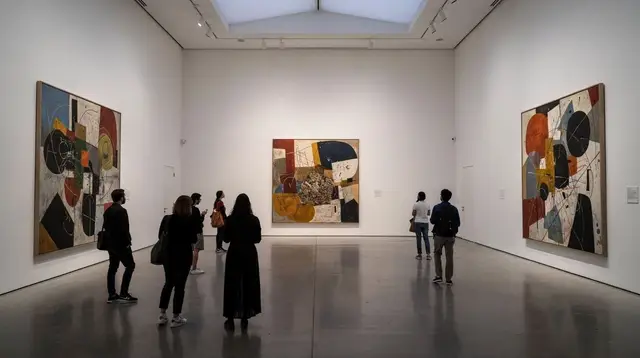
The Brooklyn Museum is the second-largest art museum in New York City by exhibition space, with strong collections of Egyptian antiquities, American art, and a rotating program of contemporary exhibitions that regularly rivals what is showing across the river. It runs free or reduced-admission evening hours on a periodic schedule, worth checking before a visit since the standard admission otherwise applies. Those free evenings are known as First Saturdays, and a First Saturdays program at the Brooklyn Museum combines free admission with extended hours, live music and pop-up programming, making it worth planning an evening around when the schedule lines up with your trip. The adjoining Brooklyn Botanic Garden is particularly worth timing around spring, when its cherry blossom collection - smaller than Central Park’s but arguably more concentrated - draws crowds during the Sakura Matsuri season in late April and early May.
Barclays Center and Downtown Brooklyn
A short subway ride or walk northwest of Prospect Park, Barclays Center anchors Downtown Brooklyn as the home arena for the Brooklyn Nets and a regular stop for major touring concerts. The surrounding Downtown Brooklyn and Fort Greene area has grown into a genuine secondary business and entertainment district over the past decade, with its own hotel cluster, making it a practical base for visitors who want to be close to both Prospect Park and the subway lines running back into Manhattan.
Williamsburg and the Brooklyn Flea
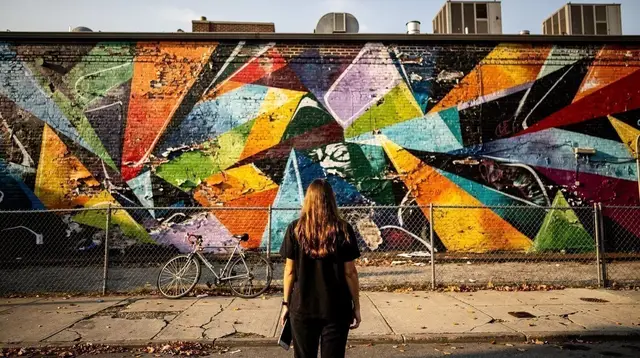
Williamsburg sits on the northern waterfront, connected to Manhattan by the L train under the East River or a short ferry ride, and it operates on its own logic entirely separate from the Prospect Park cluster - treat it as its own trip, not a stop on the way to somewhere else. It is Brooklyn’s best-known neighborhood for independent shops, a dense concentration of bars and restaurants, and street art scattered through the blocks south of the Williamsburg Bridge. The Brooklyn Flea, a weekend market for vintage goods, crafts and food vendors, runs seasonally between Williamsburg and other rotating locations - it is not a fixed daily market, so check the current schedule before building a day around it specifically.
Daytime and nighttime Williamsburg are close to two different neighborhoods. For the daytime side, a Williamsburg walking tour guide and a Williamsburg food tour guide cover the independent shops, street art and restaurant scene block by block. Once the sun goes down, the neighborhood’s bar density becomes the main draw, and a guided Williamsburg nightlife bar crawl tour is a practical way to sample several venues in one evening without having to research a bar list yourself.
Coney Island: the boardwalk, not just the rides
Coney Island, at the southern end of Brooklyn, is a genuinely different pace of trip - roughly 45 minutes to an hour from Midtown by subway, making it a deliberate half-day or full-day excursion rather than a quick stop. The boardwalk and beach are open and free year-round, but the amusement park rides, most food stands, and the New York Aquarium’s full operating hours run on a seasonal schedule concentrated in late spring through early fall. Visiting in winter still has its appeal - a quiet, slightly melancholy boardwalk walk with the Wonder Wheel silhouetted against the sky - but it is a different experience from the working, crowded summer version most photos show.
Families planning a warm-weather visit can find a fuller breakdown of rides, beach logistics and timing in the Coney Island family day trip guide, while visitors more interested in the neighborhood’s century-plus history as an amusement district will get more out of the Coney Island boardwalk history tour guide, which covers how the area evolved from its Gilded Age heyday to today.
Dyker Heights and other outer pockets
Further south and largely residential, Dyker Heights becomes a destination in its own right during December, when a cluster of homes go all-in on elaborate holiday light displays that draw visitors from across the city. Outside the holiday season it is simply a quiet residential neighborhood with little reason for a tourist detour, which is a useful reminder that Brooklyn’s map is uneven - some pockets earn a special trip only at a specific time of year. The Dyker Heights Christmas lights guide covers which streets to prioritize and how to get there and back on the subway during the display’s peak weeks.
Getting around: the subway lines that actually matter
Brooklyn is served by several distinct subway trunk lines, and knowing which one serves which neighborhood saves real time on the ground.
| Line | Serves | Approx. time from Midtown |
|---|---|---|
| 2 / 3 | Downtown Brooklyn, Prospect Heights, Flatbush | 25-30 min |
| 4 / 5 | Downtown Brooklyn, Barclays Center, Prospect Park | 25-30 min |
| A / C | Brooklyn Heights, Bedford-Stuyvesant | 25-35 min |
| F / G | Park Slope, Carroll Gardens, Williamsburg-adjacent stops | 25-35 min |
| L | Williamsburg, Bushwick | 20-25 min |
| Q / B | Prospect Park, Coney Island, Brighton Beach | 30-50 min |
A single ride is a flat $2.90 whether paid by tapping a contactless card or phone through OMNY or by swiping a MetroCard, with a free transfer to a connecting subway or bus within two hours. There is no separate Brooklyn fare zone or surcharge - the pricing and system are identical to the rest of the city’s subway.
Getting to Brooklyn from the airports
Brooklyn has no airport of its own, so most visitors arrive through one of the region’s three airports and then transfer in. From JFK, which sits in Queens not far from Brooklyn’s eastern edge, the A train reaches parts of Brooklyn directly, and travelers who prefer not to manage subway transfers with luggage can arrange a private transfer in advance - see the dedicated JFK airport private transfer guide for details. From LaGuardia, also in Queens but on the opposite side from JFK, the LaGuardia airport transfer guide covers the fastest routes into Brooklyn, which typically involve a bus connection to the subway rather than a single direct line. Visitors flying into Newark in New Jersey have the longest crossing into Brooklyn of the three airports; the combined JFK, LaGuardia and Newark airport transfer guide compares all three approaches side by side.
Brooklyn alongside the rest of New York City
Brooklyn’s practical position - a full borough in its own right, but one subway ride from Manhattan - makes it a natural pairing with several other parts of the city rather than a single side trip. A short ferry or subway ride connects it to Lower Manhattan and the Statue of Liberty, both visible from Brooklyn Bridge Park’s waterfront. Further afield, Staten Island and the Bronx round out the outer boroughs for visitors with enough time to see more than one, and Long Island’s waterfront extends the same East River geography further out - visitors drawn to Brooklyn’s waterfront parks sometimes extend the theme with a Long Island yacht party with water activities as a full-day change of pace from walking tours.
For visitors weighing how to split their time, the two-day Manhattan and Brooklyn itinerary and the five-day, five-neighborhoods itinerary both build Brooklyn into a wider New York City trip rather than treating it as an add-on. Two further reads are worth a look before you plan: the realistic take on seeing Brooklyn in one day, which is blunt about what does and does not fit, and Manhattan versus New York City, which explains why “New York” and “Manhattan” are not interchangeable terms - a distinction that matters most once you start planning time in boroughs like Brooklyn.
A realistic two-to-four-day structure
Rather than one long Brooklyn day, a workable structure looks like this: one day for Brooklyn Bridge Park, DUMBO and the bridge crossing itself; a second day for Prospect Park, the Brooklyn Museum and the Botanic Garden as a walkable cluster; a third day, if time allows, for Williamsburg on its own; and a fourth, seasonal day for Coney Island in warmer months or Dyker Heights in December.
Visitors with only two days should prioritize the Brooklyn Bridge Park and Prospect Park clusters, since both combine a landmark view or landmark park with a museum or notable architecture within a manageable walking radius - the two areas of Brooklyn where compressing a visit actually works without feeling rushed. For a guided introduction that ties several of these together in one outing, a two-hour guided walking tour covering the borough’s best-known highlights is a practical way to orient yourself before returning independently to the neighborhoods that interested you most.
Whichever structure you choose, resist the temptation to treat Brooklyn as a single afternoon squeezed in between Manhattan sights. It is a full borough with its own subway map, its own seasons, and its own reasons to come back.