Central Park's North End: Harlem Meer and the North Woods on Foot
Can I get a pedicab at the north end of Central Park, near Harlem?
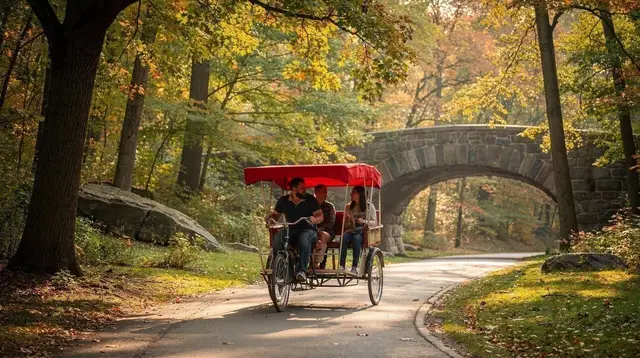
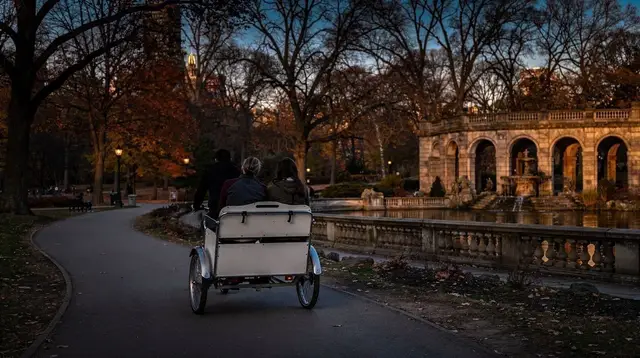
Realistically, no. Pedicabs cluster around the park's southern entrances near Midtown, where drivers wait for walk-up riders. The Harlem Meer and North Woods area, near 110th Street, has no organized pedicab presence, and the short distances involved make walking the practical choice anyway.
A quieter Central Park, and why it doesn’t have a pedicab scene
Most visitors picture Central Park’s pedicabs clustered near Columbus Circle or Grand Army Plaza, drivers calling out to tourists as they step off a Midtown sidewalk. That picture is accurate, but only for the southern third of the park. Head to the opposite end, the stretch north of around 100th Street that borders Harlem, and the pedicab economy simply doesn’t exist. There’s no stand, no cluster of drivers, no informal queue of bike-taxis waiting for a fare. If you’re planning a visit to the Harlem Meer or the North Woods and hoping to flag down a pedicab the way you might near the zoo or the Mall, it’s worth resetting that expectation before you arrive.
This isn’t a complaint about the neighborhood or a suggestion that the north end is somehow lesser. It’s a simple point about where paid pedicab operators choose to work, and it happens to line up with an area that’s genuinely well suited to walking anyway. The distances here are short, the paths are well marked, and the character of the landscape, more wooded and less manicured than the park’s southern lawns, rewards a slower pace on foot far more than it would a bike-taxi ride.
Getting there: 110th Street and Central Park North
The most direct way into this part of the park is the subway. The 2 and 3 trains stop at 110th Street-Central Park North, putting riders within a short walk of several entrances along the park’s northern edge. Depending on which side of the park you’re approaching from, the B and C trains at Cathedral Parkway-110th Street, further west, is another workable option, as are the stations spaced along Central Park North and up into Harlem proper.
Once you’re above ground, the entrances along Central Park North (the street that runs along the park’s 110th Street border) lead almost immediately into the landscape that defines this section: the Harlem Meer to the east, the North Woods to the west, and the Conservatory Garden a bit further south along Fifth Avenue.
The walk from the entrance to the Harlem Meer
Here’s the number that matters most for planning purposes: the distance from the 110th Street entrances to the Harlem Meer itself is only a few hundred meters. This is not a trek. It’s the kind of distance most people cover without thinking about it, let alone needing a wheeled vehicle. If you’re coming from the subway with the intention of seeing the Meer, the most sensible plan is simply to walk in and enjoy the approach as part of the visit, rather than looking for transport to cover ground that a five- or ten-minute stroll handles easily.
The Harlem Meer itself is an 11-acre lake, one of several bodies of water built into Central Park’s design. It’s used for catch-and-release fishing, with poles available seasonally near the Charles A. Dana Discovery Center on its northern shore, and its paths make for an easy, flat loop with good sightlines across the water toward the buildings of Central Park North and Harlem beyond.
Why hailing a pedicab here isn’t realistic
Pedicab drivers, like most people running a service business, position themselves where the demand is. In Central Park, that demand is concentrated near the entrances closest to Midtown hotels and major tourist landmarks: Columbus Circle, the areas around the zoo, and the horse-carriage staging zones near Grand Army Plaza. Drivers wait there because that’s where a steady stream of visitors, many of them unfamiliar with the park’s scale and looking for an easy way to cover it, are likely to want a ride.
The northern end of the park doesn’t generate that same walk-up demand, and as a result it doesn’t have a comparable cluster of pedicabs waiting around. This doesn’t mean a pedicab could never be found here, and it doesn’t mean the area is off-limits to any kind of wheeled transport. It means the informal, flag-one-down model that works reliably near the park’s southern entrances doesn’t translate to this part of the park, and visitors shouldn’t plan around the assumption that it will. If a guided pedicab experience is what you’re after, that’s realistically a southern-park activity, worth booking or arranging before you head north rather than hoping to arrange one on the spot near the Meer.
For travelers who do want the classic pedicab experience elsewhere in the park, it’s worth booking ahead rather than negotiating with a driver on the street; a guided Central Park pedicab tour is arranged in advance with a set route and price, which sidesteps the haggling that can happen with unaffiliated drivers near the park’s busier entrances.
The North Woods: a different character
West of the Harlem Meer, trails climb into the North Woods, a more densely wooded section of the park built around a small, rocky stream called the Loch. Rustic wooden and stone bridges cross the water at a few points, and the terrain here is noticeably less manicured than the open lawns and formal plantings further south. It’s a section of the park designed to evoke a wilder, more rugged landscape, complete with the Blockhouse, a small stone fortification dating to the War of 1812 that sits on a rise near the park’s northwest corner.
None of this terrain calls for a pedicab, or even particularly benefits from one; the paths through the North Woods are narrow, wooded and built for walking, not for cycling with a passenger cab attached. It’s also a genuinely good area for casual birdwatching, drawing regular visits from local birders throughout the year, particularly during spring and fall migration.
One stop further south: the Conservatory Garden
If the walk from the subway to the Harlem Meer feels too short to count as a proper outing, the Conservatory Garden gives it a natural extension. It sits a bit further south along Fifth Avenue from the Meer, reachable by the same set of entrances along Central Park North, and it’s the most formal of the park’s gardens, laid out with the kind of symmetrical plantings and wrought-iron gates that stand in deliberate contrast to the wilder North Woods on the park’s other side. Visiting both in the same outing, the formal garden and the rougher woodland, gives a fuller sense of how deliberately Olmsted and Vaux varied the character of the park from one section to the next, rather than repeating the same manicured look throughout. It’s an easy add-on for anyone who’s already made the trip up to 110th Street and doesn’t want to turn around after a single stop.
Birdwatching and the Blockhouse, in a bit more detail
The North Woods draws a steadier stream of local birders than its size might suggest, largely because the combination of the Loch, dense tree cover and relatively low foot traffic (compared to the park’s southern lawns) creates conditions that migratory birds favor. Spring and fall migration are the most active windows, when the woods can feel genuinely busy with visiting species even while the human crowd stays thin. The Blockhouse, the small stone fortification from the War of 1812 mentioned above, sits on high ground near the park’s northwest corner and makes a good landmark for orienting yourself if you’re exploring the Loch’s paths without a fixed route in mind; there’s no set trail you’re required to follow through this section, and part of the area’s appeal is the freedom to wander it at a slower pace than the more structured southern loop invites.
Combining the visit with Harlem itself
Because the 110th Street entrances sit right at the edge of Harlem, it’s easy to treat the Meer and North Woods as the first half of a day that continues into the neighborhood rather than a stand-alone park visit. A morning walk through the North Woods pairs naturally with an afternoon or evening built around Harlem’s food and music scene; the Harlem soul food tour guide covers one way to structure that, and travelers interested in a Sunday visit specifically might look at the Harlem Sunday gospel church service tour for how that fits around a morning in the park. For a broader sense of the neighborhood beyond the park’s edge, the Harlem walking tour covers the wider area on foot, while a guided Harlem walking tour is a reasonable way to see the neighborhood’s landmarks without planning a route from scratch.
Anyone extending the day south instead, back toward the park’s more familiar sections, can also pair this with the Museum Mile and Upper East Side guide, since the walk down the park’s eastern edge from the Meer connects fairly directly to that stretch of Fifth Avenue.
A quick fact worth knowing before you go
Central Park covers 843 acres, all of it designed rather than found: Frederick Law Olmsted and Calvert Vaux drew up the plan, and construction began in 1858 on land that was previously rocky, swampy, and partly occupied by the razed settlement of Seneca Village. The North Woods and the Harlem Meer sit at the far northern edge of that design, and they were deliberately built to feel wilder and less manicured than the park’s southern lawns and formal walkways, a contrast that’s still obvious today. Knowing that the entire park, wild-looking corners included, is a 19th-century construction rather than a preserved natural area helps explain why the North Woods reads as rugged without actually being untouched wilderness.
What this area is not
It’s worth being direct about two things this guide won’t claim. First, this isn’t a section of the park where you can count on finding a pedicab, the way you reasonably could near Columbus Circle; treat any expectation otherwise as a planning mistake to avoid, not a minor inconvenience. Second, there’s no verified basis here for describing the North Woods or the Harlem Meer as dangerous or as an area to avoid. It’s a quieter, more wooded part of a very large public park, well used by local residents, birdwatchers and anyone looking for a slower pace than the crowded southern loop offers. Ordinary city-park awareness applies, as it would anywhere, but that’s a different claim from suggesting the area carries some special risk.
Planning your visit: north end versus south loop
| North end (Harlem Meer / North Woods) | South loop (Columbus Circle / Grand Army Plaza) | |
|---|---|---|
| Nearest subway | 110th Street (2/3), Cathedral Parkway (B/C) | Columbus Circle (1/A/B/C/D), 59th Street (N/R/W) |
| Pedicab availability | None organized; not realistic to hail one | Readily available near entrances |
| Walking distance from subway to main sight | A few hundred meters | Varies, often similarly short |
| Landscape | Wooded, rugged, informal | Manicured lawns, formal plantings |
| Crowd level | Noticeably thinner | Busy, especially midday and weekends |
| Best way to get around | On foot | On foot, or pedicab/bike for longer stretches |
Making the most of a walking visit
Because the distances here are short, a walking visit to the Harlem Meer and North Woods pairs easily with time spent in Harlem itself before or after. Anyone combining the two might look at a broader Central Park pedicab tour booked for the busier southern sections on a separate day, keeping this northern stretch as a slower, self-guided walk rather than trying to force a bike-taxi into a part of the park that isn’t set up for one.
Good footwear matters more here than in the manicured south; paths through the North Woods can be uneven and occasionally muddy after rain, given the more natural, less paved character of the terrain. Bringing water and dressing for the season is sensible advice for any park visit, but it applies with slightly more weight here simply because you’re further from the amenities, cafes and restrooms clustered near the park’s busier entrances.
If you’d rather build a full day around Central Park with guided elements throughout, a broader guided pedicab tour of Central Park is the more realistic way to include that experience, arranged and confirmed before you set out, rather than expecting to find a driver waiting at the north end.
The bottom line
The Harlem Meer and North Woods sit at the far end of Central Park from where the pedicab trade actually operates, and the short walking distance from the 110th Street entrances makes that a non-issue rather than a limitation. Reach the area by subway via 110th Street or Central Park North, expect to cover the last stretch on foot, and treat the quieter, more wooded character of this part of the park as a feature of the visit rather than something to route around. For a wheeled, guided experience, that’s a southern-park plan, best booked ahead through a Central Park pedicab tour rather than hoped for on the spot up north.
Anyone building a longer Harlem visit around this can pair the walk with the Harlem walking tour, or extend the park visit south with the Central Park walking tour covering the more familiar southern landmarks. For context on how pedicab pricing and etiquette work in the parts of the park where they do operate, see what to know about Central Park pedicab scams and the Central Park pedicab south loop tour guide.
Those planning transit around the wider neighborhood can also check the Central Park destination overview and the Harlem destination page for more on what’s nearby, along with the NYC subway OMNY and MetroCard guide for fare basics before heading out.
If a broader first-time itinerary is what you need, the three-day classic New York itinerary and five neighborhoods in five days itinerary both have room to fit in a slower morning at the park’s northern edge. For evening plans in the same part of town, the Harlem gospel history and jazz walking tour and Harlem soul food gospel brunch tour both start from points an easy walk from the Meer.
Those weighing which paid attractions are actually worth the money nearby can also check the comparison of Central Park pedicab options hub, and the Harlem activities hub for a fuller list of things to do in the neighborhood, plus the things to do in New York City hub for citywide planning.
Central Park Pedicab & Carriage Rides
Verified deep-linked GetYourGuide tours. Book through these links and we earn a small commission at no cost to you.
GetYourGuide does not provide a product photo for this activity — the image shows the meeting point, photographed by us.