Harlem Gospel and Jazz History Walking Tour
What does a Harlem gospel and jazz history walking tour actually include?
It is a guided walk past historic sites tied to the Harlem Renaissance and jazz age, including the Apollo Theater's exterior, Striver's Row, and former jazz venue sites. It does not include entry inside the Apollo without a separate show ticket, and it is not a religious service.
Walking Harlem’s musical history, block by block
Harlem’s reputation as a birthplace of American music was not built on a single stage. It grew out of a whole neighborhood of theaters, ballrooms, rowhouses and rehearsal rooms that, across the 1920s and 1930s, drew some of the country’s most influential musicians, writers and performers to a few square kilometers north of Central Park. A gospel and jazz history walking tour follows that geography on foot, moving between buildings that still stand and sites whose original structures are long gone, using street-level storytelling to reconstruct what happened where.
This kind of walk is deliberately narrow in scope. It is not a live concert, not a nightclub crawl, and not an invitation into an active church service — it is a history and architecture walk, told standing on the sidewalk outside the places that mattered. Understanding that distinction upfront makes the experience far more satisfying: you come away knowing why Harlem sounds the way it does in the American imagination, rather than expecting a performance the tour was never built to deliver.
The Harlem Renaissance, in short
The Harlem Renaissance refers to a period, broadly the 1920s into the mid-1930s, when Harlem became a center of Black literary, artistic and musical life in the United States. Migration from the American South and the Caribbean brought a concentration of writers, painters, composers and performers into a compact set of blocks north of Central Park, and the neighborhood’s clubs, theaters and salons became incubators for new work. Jazz, in particular, moved through Harlem’s venues from small rent-party rooms to some of the best-known stages in the country.
A walking tour built around this era treats the neighborhood itself as the primary source: a rowhouse where a composer lived, a marquee that has announced acts for nine decades, a corner where a ballroom once stood. None of this requires stepping inside a single building to understand — which is exactly how most of these tours are built.
Stop by stop: what a typical route covers
Routes vary by guide and operator, but most gospel-and-jazz-history walks in Harlem draw from a similar set of stops. A representative itinerary looks something like this:
| Stop | What it is | What you see |
|---|---|---|
| 125th Street corridor | Harlem’s main commercial artery | Storefronts, street life, orientation to the neighborhood |
| Apollo Theater | Landmark venue, opened 1934 | Historic marquee and facade from outside; no interior access without a show ticket |
| Striver’s Row | Row of townhouses on 138th/139th Streets | Residential architecture linked to Harlem’s early Black professional class |
| Renaissance Ballroom site | Former dance hall and social hub | Site history and its role in the neighborhood’s cultural life |
| Side streets and churches | Residential blocks with historic churches | Exterior views and context on gospel music’s roots, without entering a service |
Guides typically link each stop to specific figures and events rather than treating the walk as a list of facades. A pause outside a rowhouse might cover who lived there and why the block earned its reputation; a stop near a former ballroom site explains what stood there and who performed, even where the physical building is gone.
The Apollo Theater, and what “seeing” it means
The Apollo Theater opened in 1934 on 125th Street and quickly became one of the most important venues in American music, launching or showcasing performers across jazz, R&B, soul and beyond over the following decades. On a history walking tour, the Apollo is a stop, not an admission — you see the marquee, the facade, and hear its history, but going inside for a show is a completely separate transaction, booked directly through the Apollo’s own box office for whatever is programmed that week or month.
No walking tour ticket includes entry to a performance, and no guide can add you to a show that isn’t already on the calendar. If seeing a live show at the Apollo is the goal, treat it as a second, independent booking to make alongside the walk, not a feature of it.
Striver’s Row
Striver’s Row, the popular name for the King Model Houses on West 138th and 139th Streets, is a stretch of well-preserved townhouses built in the 1890s and associated with Harlem’s early Black professional and creative class in the 20th century. It is a quieter, residential contrast to 125th Street’s commercial bustle, and most tours use it to slow the pace and talk about the people who actually lived in the neighborhood during its most creative decades, rather than only the venues where they performed.
The Renaissance Ballroom and Harlem’s lost venues
Not every historically significant site in Harlem is still standing, and a good history walk is honest about that. The Renaissance Ballroom, once a major Harlem dance hall and community venue, is one of several sites where the building itself has changed or vanished, but the location still carries the story. Guides use these stops to describe what a place looked like and who passed through it, treating the empty or altered lot as historical evidence rather than skipping it for lack of a photogenic facade.
Duke Ellington and the sound of the era
Duke Ellington is one of the figures who comes up repeatedly on these walks, both for his own compositions and for his years leading the house orchestra at the Cotton Club in the late 1920s, a period that did much to spread the sound coming out of Harlem to a national radio audience.
It’s worth knowing that the Cotton Club’s original building at its first Harlem location is no longer there in its historic form; the club later relocated, and the site referenced on a walking tour is typically discussed for its history rather than visited as an intact original structure. Ellington’s story is used less as a single stop and more as a thread that ties several sites together — the ballrooms, the theaters, and the composers’ rowhouses all connect back to the same few years of intense musical output.
What this tour is, and what it deliberately is not
It’s worth being direct about the boundaries of this kind of walk, because online descriptions of Harlem tours sometimes blur them.
This is a historical and architectural walking tour. It covers the Harlem Renaissance, the neighborhood’s jazz-era venues, and its gospel music heritage, told through buildings, streets and stories. It does not include:
- Entry inside the Apollo Theater without a separately purchased ticket to a programmed show.
- Attendance at an active religious service, gospel or otherwise, as part of the price.
- A live jazz performance or concert booked into the tour itself.
Tours that specifically include a Sunday church visit or a live gospel performance exist as their own separate product, built and priced differently, and typically require different etiquette (modest dress, no photography during the service, arriving well before the tour’s stated meeting time). If attending a service or a live show is what you’re after, look for a tour explicitly built around that experience rather than a general history walk, and treat the two as different bookings even if you do both on the same trip to Harlem.
Practical details
- Typical duration: 2 to 2.5 hours.
- Typical distance: roughly 3 kilometers (under 2 miles), at a relaxed walking pace with stops.
- Main street covered: 125th Street, Harlem’s principal commercial corridor, plus surrounding residential blocks.
- Group format: most operators run small to mid-sized groups with a live guide; private options exist for smaller parties.
- What’s not included: Apollo Theater show tickets, restaurant meals, and entry to any active religious service.
- Best timing: daytime hours work well for photography and street life on 125th Street; confirm your specific tour’s meeting time and point, since these vary by operator.
Getting there and getting around
Most visitors reach 125th Street by subway, and the OMNY and MetroCard fare guide covers the practical side of tapping in for a single ride up to Harlem, whether you’re coming from Midtown, the Upper East Side or Brooklyn. Because the walk is entirely outdoors and on foot, there’s no need to plan around opening hours the way you would for a museum — only around your specific tour’s meeting time and point.
If Harlem is one stop on a longer day, the Manhattan versus New York City explainer is a useful reality check for first-time visitors who assume the two names mean the same thing, since it affects how you think about distances between Harlem and the rest of the island.
Getting oriented and pairing the walk with the rest of Harlem
Harlem rewards a full afternoon rather than a rushed hour, and this walk pairs naturally with other things to do in the neighborhood. Many visitors combine a gospel-and-jazz history walk with a meal at one of Harlem’s well-known soul food spots — a dedicated Harlem soul food and gospel brunch tour is one way to fold both into the same day — or extend the day with a broader look at the neighborhood’s civil rights history. If your schedule allows only one Harlem outing on this trip, this history walk is a solid anchor precisely because it doesn’t require booking around a service time or a show schedule — you can start it whenever the operator’s next departure is and build the rest of the day around it.
Because Harlem sits at the northern edge of Manhattan, it also pairs naturally with a look at the Upper East Side just to the south, or with a walk through Central Park itself — a Central Park walking tour makes a logical bridge between the two neighborhoods if you’re moving north on foot or by bus rather than subway. Travelers piecing together a single day of Manhattan highlights alongside Harlem may also find the one-day Manhattan essentials itinerary useful for sequencing the rest of the day, and anyone still mapping out daily spending across the trip can check the New York City budget planning guide for how a walking tour like this one fits into an overall daily budget.
For a broader first look at the neighborhood before or after this walk, see the general Harlem neighborhood guide, and for the full range of things to do here, browse Harlem gospel tours as a category. If you’d rather structure your whole day around Harlem specifically, an itinerary built around five distinct neighborhoods is one way to see how a Harlem afternoon fits into a longer New York trip, and travelers assembling a full week might look at ten days covering New York, Niagara, Boston and Washington for the bigger picture.
If you do want the live-performance or service side of Harlem’s gospel and jazz scene, treat it as an addition rather than a swap: a Sunday walking tour paired with gospel in West Harlem or a dedicated jazz club evening are both realistic ways to round out the history walk described here. And if the Apollo’s marquee has you curious about seeing a show, check what’s actually programmed before you go — availability and lineups change constantly, and no history tour can substitute for a same-week look at the box office.
Beyond Harlem itself, this walk sits well within a wider look at Manhattan’s cultural geography. Compare it with a Greenwich Village walking tour for a very different slice of the city’s creative history, or a SoHo and Chinatown walking tour if you’re stacking multiple neighborhood walks into one visit. For visitors weighing how much of Manhattan’s museum and gallery scene to add on, the Museum Mile guide to the Upper East Side is a natural next stop, given its proximity to Harlem’s southern edge.
Booking the walk
Several operators run this kind of tour, with some variation in emphasis — a few lean harder into jazz history, others fold in more civil rights context alongside the music. A standard Harlem walking tour with an optional gospel choir add-on is a flexible starting point if you want the history walk with the choice to layer on a gospel element separately.
For a route that leans specifically into the jazz side of Harlem’s story, a Harlem jazz-focused walking tour spends more time on the venues and musicians of the era, and a similar jazz and blues history walk covers comparable ground with its own route and pacing. If you’d rather widen the lens to Harlem’s role in 20th-century civil rights history alongside its music, a Harlem civil rights history walking tour covers adjacent territory with a different focus.
Whichever option you choose, confirm before booking whether the description promises interior Apollo Theater access or a religious service — if it does, understand exactly what that includes and how it’s structured, since the standard history walk covers neither.
If a straightforward general-interest walk is what you want without leaning hard into either jazz or civil rights, a plain Harlem walking tour covers the neighborhood’s landmarks at a broader, less specialized pace.
Adding a Sunday service or a soul food stop
Two of Harlem’s most requested experiences sit right next to this history walk without actually being part of it, and both are worth planning as separate bookings rather than assuming either is included.
For the gospel side, a dedicated Harlem Sunday gospel church service tour is built specifically around attending an actual service, with its own etiquette and timing — read the gospel church service etiquette guide before booking, since dress code, photography rules and arrival times differ meaningfully from a standard sightseeing walk.
For food, a Harlem soul food tour covers the neighborhood’s restaurant scene directly, and its companion soul food tour guide has more detail on what a typical stop looks like. Either one pairs naturally with the history walk described here, whether booked before, after, or on a different day of the same trip.
Harlem gospel and jazz history walk FAQ
Does this walking tour go inside the Apollo Theater?
No. The tour covers the Apollo’s history and its landmark 1934 facade from the outside on 125th Street. Stepping inside requires a separate ticket to a scheduled show, booked through the theater’s own box office, not through the walking tour.
Will I attend a real gospel church service?
Not on this particular walk. This tour is historical and architectural: it discusses gospel music’s roots in Harlem and points out churches from the sidewalk, without entering an active service. Tours built specifically around attending a Sunday service are a separate product and are booked and behave differently.
How long is the walk and how far do you go?
Typical tours run about 2 to 2.5 hours and cover roughly 3 kilometers (under 2 miles) on foot, at an easy pace with stops for storytelling at each site.
What is 125th Street’s role in the tour?
125th Street is Harlem’s main commercial artery and the location of the Apollo Theater. Most itineraries use it as a spine, branching off to residential streets like Striver’s Row and back.
Who is Duke Ellington and why does he come up on this walk?
Duke Ellington was a bandleader and composer whose orchestra was resident at the Cotton Club in the late 1920s, at the height of the Harlem Renaissance. Guides reference him and other musicians of that era to explain why Harlem became a center of jazz innovation, though the original Cotton Club building itself no longer stands at its first location.
Is this tour suitable if I only have one afternoon in Harlem?
Yes. At 2 to 2.5 hours it fits comfortably into a half-day Harlem visit alongside lunch or a stop at a museum, and it does not require booking a separate ticket for a live show or service.
Do I need to book tickets in advance?
Advance booking is recommended, especially on weekends, since group sizes are limited. A separate, additional ticket is required if you also want to see a live show at the Apollo Theater.
Harlem Gospel & Soul Food
Verified deep-linked GetYourGuide tours. Book through these links and we earn a small commission at no cost to you.
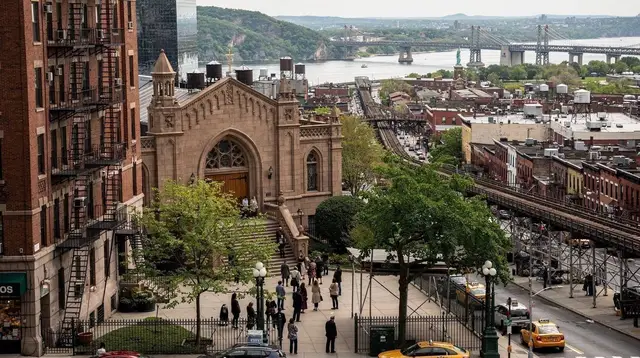
GetYourGuide does not provide a product photo for this activity — the image shows the meeting point, photographed by us.