SoHo's Independent Art Galleries: A Realistic Guide
Are there still art galleries in SoHo, New York?
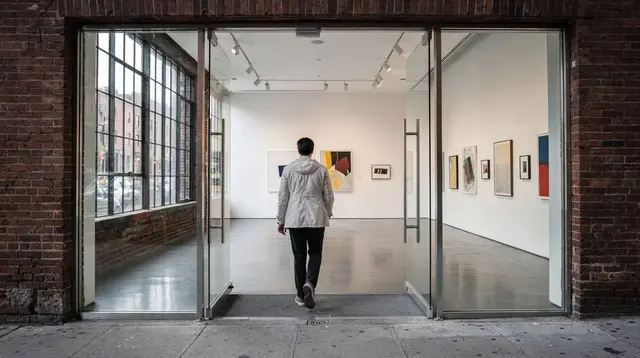
Yes, but far fewer than in the 1970s-80s heyday. A handful of independent galleries remain, mostly clustered between Broadway and West Broadway, surrounded by luxury retail. Entry is free. For a serious contemporary art crawl, Chelsea has replaced SoHo as the city's primary gallery district.
What’s actually left of SoHo’s art scene
Ask most New Yorkers where to see contemporary art and they’ll say Chelsea, not SoHo, and they’re right. It’s easy to arrive in SoHo expecting the gallery-hopping experience the neighbourhood was famous for a generation ago and instead find a stretch of designer flagship stores, so it’s worth being upfront about what’s changed and what’s still genuinely here.
From the mid-1970s through the late 1980s, SoHo was the center of New York’s contemporary art world. Artists moved into the neighbourhood’s cast-iron loft buildings, originally built as 19th-century industrial warehouses, because the raw, open floor plans and cheap rents suited both studios and exhibition space. Dozens of galleries opened along Broadway, West Broadway, Wooster Street and Greene Street, and SoHo became the place collectors, critics and artists gathered.
That era ended for an unglamorous but predictable reason: rent. As SoHo’s cast-iron architecture and downtown cachet attracted retail investment through the 1990s, commercial rents climbed well beyond what most galleries could sustain. Chelsea, then a comparatively overlooked stretch of Manhattan’s far west side with large, affordable industrial spaces, absorbed the exodus. By the early 2000s, the shift was largely complete, and Chelsea has remained the city’s dominant gallery district ever since, home to dozens of spaces within a few walkable blocks.
None of this means SoHo’s galleries vanished entirely. A smaller, independent scene persists today, mostly concentrated in the blocks between Broadway and West Broadway. It’s a legitimate half-day stop, particularly if you’re already exploring the neighbourhood’s architecture or shopping streets, but it is not, and should not be marketed as, a substitute for a serious contemporary art day. If contemporary art is your priority, budget your time for Chelsea instead, or in addition.
Where to actually find them
The remaining galleries cluster loosely in the corridor between Broadway and West Broadway, running roughly from Houston Street down toward Grand Street. This isn’t a single continuous gallery row the way parts of Chelsea are; expect to pass boutiques, cafes and residential entrances between stops rather than one gallery after another. Wooster Street and Greene Street, the historic heart of the 1980s scene, now lean almost entirely toward retail, though a few smaller exhibition spaces persist on side streets and upper floors.
Getting there is straightforward. The Prince Street station, served by the N, R and W subway lines, sits right in the middle of this gallery corridor, putting you within a few minutes’ walk of both Broadway and West Broadway. Spring Street station, on the 6 line, is a short walk to the east and works well if you’re combining the trip with a stop in Chinatown or Little Italy first.
SoHo’s geography makes this pairing natural: the neighbourhood borders Chinatown and Little Italy immediately to the south and southeast, around Canal Street and Mulberry Street. A reasonable half-day plan is to start with a walk through Little Italy or Chinatown, then head north into SoHo’s gallery blocks, finishing with time to browse the shopping streets if that’s of interest.
For a more structured introduction to the neighbourhood’s layout, cast-iron buildings and side streets, a SoHo and Chinatown walking tour covers the area’s history and can be adapted to include a stop at whichever galleries happen to be open that day.
If food is as much a draw as art, a Chinatown and Little Italy food walk or a shorter Chinatown dumpling-making workshop both start within a few minutes of SoHo’s gallery corridor, and either pairs naturally with an afternoon spent browsing whatever galleries happen to be open. SoHo’s northern edge also runs into Greenwich Village, and a dedicated Greenwich Village walking tour is a reasonable way to extend the day if the gallery stretch turns out shorter than expected.
What to expect once you’re there
The galleries that remain in SoHo are, almost without exception, free to enter, with no ticket, no reservation and no timed entry required. This is a real point of contrast with SoHo’s other major art-adjacent draw in the area, the Museum at Eldridge Street, which is a paid, ticketed historic synagogue and museum rather than a commercial gallery, and sits just south in the Lower East Side/Chinatown border area.
Independent galleries generally keep more modest and more variable hours than a museum. Most operate Tuesday through Saturday, commonly from around 11am to 6pm, and a meaningful number close entirely on Sundays and Mondays. Weekend mornings in particular are hit or miss: several galleries open later on Saturdays than on weekdays, and Sunday morning is one of the least reliable times to find doors open. If a specific gallery is the reason for the trip, check its current listed hours before arriving rather than assuming standard retail hours apply.
Because the scene is smaller and more scattered than it once was, treat a SoHo gallery walk as a flexible, browsing-style outing rather than a itinerary with fixed stops. Expect to check what’s actually on view and open on the day, walk the Broadway-to-West Broadway corridor, and treat whatever you find as a bonus rather than the day’s main event.
SoHo galleries versus Chelsea: setting expectations
This is the comparison worth making honestly before you plan a special trip.
| SoHo today | Chelsea today | |
|---|---|---|
| Gallery density | Low; scattered independent spaces | High; dozens within a few blocks |
| Neighbourhood character | Luxury retail and cast-iron architecture | Industrial buildings, dedicated gallery blocks |
| Cost to enter | Free | Free (almost universally) |
| Best for | A short stop while exploring SoHo already | A dedicated contemporary art day |
| Historical role | The original 1970s-80s gallery district | The district that replaced SoHo from the 1990s-2000s onward |
If contemporary art galleries are the actual purpose of your visit, plan your main gallery time around Chelsea’s gallery district and the High Line, which offers a genuinely dense, walkable concentration of spaces, many showing significant contemporary work by established and emerging artists alike. Treat SoHo’s galleries as a supplementary stop, not the destination.
For visitors who want a broader survey of New York’s art institutions rather than a specific neighbourhood crawl, it’s also worth weighing museum time against gallery time. The Museum Mile stretch of the Upper East Side concentrates several of the city’s major museums, including the Met, along a single avenue, which is a very different (and more curated) experience than browsing independent galleries. A guided walk through Chelsea’s galleries and the High Line can be booked as a combined gallery and High Line walking tour if a guided structure appeals more than browsing independently.
If MoMA is part of the plan too, checking its free evening hours before setting a schedule can save the cost of admission, and the Met has its own pay-what-you-wish policy for New York State residents worth knowing about before booking a paid ticket.
Combining a museum stop with your day
If you’re building a fuller day of art in New York around a SoHo gallery walk, the Metropolitan Museum of Art, uptown on Museum Mile, remains the single most comprehensive stop in the city, spanning everything from ancient Egyptian artifacts to contemporary installations. A guided tour of the Met is a practical way to see the highlights efficiently if you’re short on time, since the museum’s scale can otherwise easily absorb a full day on its own.
Travelers who prefer to skip the general-admission line can book a Met tour with skip-the-line entry instead, which pairs well with an afternoon spent downtown in SoHo, since the Met sits far uptown and is best treated as a separate leg of the day rather than a quick add-on.
For a different, and much smaller-scale, historical stop near SoHo itself, the Museum at Eldridge Street occupies a restored 19th-century synagogue in the Lower East Side, a short walk from SoHo’s southern edge. A self-guided tour of the Museum at Eldridge Street makes a genuinely worthwhile detour if you’re already exploring the Chinatown/Little Italy/SoHo cluster of neighbourhoods, and it’s a useful contrast to note: it’s paid and ticketed, unlike SoHo’s free commercial galleries.
Visitors who want more context and storytelling woven into a Met visit, rather than a purely self-directed walk-through, might prefer a guided tour covering lesser-known stories and details at the Met, which digs into pieces and histories that are easy to walk past unguided.
Setting the right expectations
It’s worth repeating plainly: SoHo is not New York’s contemporary art district in 2026, and hasn’t been for roughly two decades. The neighbourhood’s role in the city’s art history is real and significant, and a handful of independent galleries genuinely do remain in the blocks between Broadway and West Broadway, free to visit with no advance planning needed. But the density that made SoHo famous moved to Chelsea in the 1990s and 2000s and has stayed there. Visitors who come to SoHo specifically expecting a wall-to-wall gallery experience, the way the neighbourhood is sometimes still described online, are likely to be disappointed by how few spaces remain and how much of the area is now given over to luxury retail.
The upside is that SoHo remains genuinely worth visiting for other reasons: its cast-iron architecture is among the best-preserved industrial streetscapes in the country, its proximity to Chinatown and Little Italy makes it easy to combine with a food-focused walk, and its shopping is a draw in its own right for many visitors. Treat any galleries you happen to find open as a welcome bonus on top of that, check hours before making a special trip on their account, and save the dedicated contemporary art day for Chelsea.
Practical notes before you go
Prince Street (N/R/W) and Spring Street (6) are your two subway options, both putting you within a short walk of the Broadway/West Broadway corridor. Galleries are free, unticketed, and open to walk-in visitors with no reservation required, which is a meaningful contrast to most of SoHo’s ticketed cultural neighbours further afield.
Weekday afternoons, roughly Tuesday through Saturday, are the most reliable time to find galleries open; weekend mornings and Sundays and Mondays are the least reliable, with many spaces closed entirely. If you want a genuine contemporary art crawl with real density and variety, plan that time in Chelsea rather than SoHo, and treat a SoHo gallery stop as a flexible add-on to a day that also includes the neighbourhood’s shopping streets, architecture, or a walk into neighbouring Chinatown and Little Italy.
If you’re navigating between neighbourhoods on the same day, the NYC subway fare guide covering OMNY and MetroCard is worth a quick read before you set out, and anyone carrying bags between a hotel checkout and a flight can offload them with the help of the Manhattan luggage storage guide rather than lugging them around SoHo’s narrow sidewalks.
Fitting SoHo into a longer New York trip
A SoHo gallery walk rarely fills a whole day on its own, and it slots naturally into a broader downtown itinerary. The three-day classic New York itinerary and the two-day Manhattan and Brooklyn itinerary both leave room for a downtown afternoon that can include SoHo, and the five-day, five-neighbourhoods itinerary is built around exactly this kind of neighbourhood-by-neighbourhood pacing.
If you’re still deciding how many days to give New York overall, the how many days to see New York City guide and the New York City budget planning guide are useful starting points, and travelers weighing a multi-attraction pass before committing to paid sights like the Met should check the CityPASS vs. New York Pass comparison first, since SoHo’s galleries themselves are free and won’t factor into that decision either way.
Frequently asked questions about SoHo’s art galleries
Is SoHo still the main art gallery neighbourhood in New York?
No, not anymore. SoHo was the epicenter of New York’s contemporary art scene from the 1970s through the late 1980s, but rising rents pushed most galleries out during the 1990s and 2000s. Chelsea took over as the dominant gallery district, and it remains that way today, with dozens of spaces packed into a few blocks.
Where exactly are the remaining galleries in SoHo?
The surviving independent spaces are concentrated in the blocks between Broadway and West Broadway, roughly from Houston Street down to Grand Street, with some scattered further east toward Broadway itself. There is no single gallery row left; expect to walk past several boutiques and cafes between each stop.
Do I need to book tickets to visit SoHo galleries?
No. Independent galleries in SoHo are free to enter and require no reservation or ticket, unlike major museums such as the Met or the 9/11 Museum. Simply walk in during opening hours.
What are typical opening hours for SoHo galleries?
Most galleries open Tuesday through Saturday, roughly 11am to 6pm. Many keep reduced or later hours on weekend mornings, and a number close entirely on Sundays and Mondays, so it’s worth checking a gallery’s own listed hours before making a special trip.
How do I get to the SoHo gallery area by subway?
The Prince Street station, served by the N, R and W lines, sits in the middle of the gallery blocks. Spring Street station, on the 6 line, is also a short walk away. Both put you within a few minutes’ walk of Broadway and West Broadway.
Should I visit SoHo or Chelsea for contemporary art?
For a genuine gallery-hopping day with real density and variety, go to Chelsea, where dozens of galleries sit within a compact, walkable stretch. Visit SoHo’s remaining galleries if you’re already in the neighbourhood for shopping or its historic cast-iron architecture, or if you specifically want to see what’s left of the original scene.
What is SoHo like today if it’s not a gallery district anymore?
SoHo today is primarily a luxury shopping and dining destination, packed with flagship stores for international fashion brands, set against a backdrop of well-preserved 19th-century cast-iron warehouse buildings. The art galleries that remain are a minority presence, not the neighbourhood’s main draw.
Is SoHo close to Chinatown and Little Italy?
Yes. SoHo borders Chinatown and Little Italy immediately to the south and southeast, so it’s easy to combine a gallery walk with a stop in either neighbourhood, particularly around Canal Street and Mulberry Street.
Museums & Galleries
Verified deep-linked GetYourGuide tours. Book through these links and we earn a small commission at no cost to you.
GetYourGuide does not provide a product photo for this activity — the image shows the meeting point, photographed by us.