Little Italy Mafia History Walking Tour
Is there really a mafia history walking tour in Little Italy?
Yes. Several operators run 1.5-2 hour walks around Mulberry Street covering former mafia-linked restaurants, social clubs and shooting sites. Some stories are backed by newspaper archives and court records; others are guide folklore repeated for decades, and this guide flags which is which.
Mulberry Street’s Second Life as Mob Folklore
Little Italy today is a handful of blocks, not a neighbourhood. Walk south from Houston Street toward Canal and the red-white-and-green bunting, the espresso bars and the restaurant touts pulling in tourists are concentrated almost entirely along Mulberry Street between Broome and Canal, with a few spillover blocks on Grand and Mott.
Everything around it, north, south and east, is now Chinatown, which expanded steadily through the second half of the twentieth century as Italian-American families moved out to Brooklyn, Staten Island and the suburbs. What’s left of “Little Italy” is a preserved strip more than a living neighbourhood, and that compression is exactly why a mafia history walking tour here works: a dense set of real, well-documented, and loosely-documented locations sits within about ten minutes’ walk of each other.
That density is also where the trouble starts. Little Italy has been mythologised in film, television and decades of guidebook copy long enough that fact and legend have fused. Some of what a guide tells you on Mulberry Street traces directly to newspaper front pages, trial transcripts and FBI surveillance files. Some of it is a story that has been told on walking tours for thirty years, sounds plausible, fits the neighbourhood’s reputation, and has no primary source anyone can point to. This guide treats those two categories differently on purpose, because conflating them is exactly what turns real history into unreliable tourist trivia.
What “Little Italy” actually is today
Before the mob stories, the geography matters. The historic Italian district once ran roughly from Houston Street down past Canal and from the Bowery west to Lafayette, dozens of blocks of tenements filled by waves of Italian immigration from the 1880s through the mid-twentieth century. Immigration patterns shifted, Italian-American families prospered and moved to the outer boroughs and suburbs, and Chinatown’s population grew and expanded its footprint north and east.
What tourists now call Little Italy is the surviving commercial core along Mulberry Street, kept alive largely by restaurants, an annual [Feast of San Gennaro] street festival, and its reputation. This isn’t a decline story to feel sad about; it’s the honest starting point for the walk, and any tour or guide that implies you’re standing in a sprawling Italian quarter is overselling the present tense.
The documented history: what the record actually shows
Several Little Italy addresses have genuine, sourced ties to organised crime in New York across the twentieth century. Court records, contemporaneous newspaper coverage and later journalistic and academic accounts describe a period, roughly the 1930s through the 1980s, when Mulberry Street’s social clubs, cafes and restaurants served as informal offices for organised crime figures - places to meet, eat, and be seen holding court in the neighbourhood where they’d grown up.
The most heavily documented single event tied to this stretch of Manhattan is the 1985 shooting of a Gambino crime family boss outside a Manhattan steakhouse, an assassination that was front-page news at the time and remains one of the best-sourced organised crime killings in the city’s history, reconstructed afterward through witness testimony, forensic evidence and law enforcement files. It’s the kind of anchor point that gives a walking tour real documentary weight, because you can trace the account back to trial records and contemporaneous reporting rather than a guide’s retelling of a story someone told them.
FBI surveillance of Little Italy social clubs through the mid-to-late twentieth century is also a matter of public record: wiretap transcripts, informant testimony and prosecutions under federal racketeering law produced a genuine paper trail for several of the neighbourhood’s most notorious addresses. A tour that references specific prosecutions, named defendants and dates is drawing on that record. A tour that says “and this was definitely the Genovese family’s exclusive headquarters for forty years” with no attribution is doing something different.
Where the record runs out - and where folklore takes over
Here’s the part most tours gloss over. Multiple organised crime families and countless individual associates operated in the same few blocks of Little Italy for decades. Ownership of restaurants, cafes and social clubs changed hands repeatedly - sold, reopened under new management, shut by health code violations, or converted to entirely different businesses. When a modern walking tour tells you that one specific storefront was “the” headquarters of one specific family, exclusively, for a fixed span of years, that claim is very often more folklore than fact: a good story that’s been repeated by guide after guide until repetition did the work that a citation should have done.
This matters practically, not just as a point of intellectual honesty. Several of the buildings pointed out on these tours function today as completely unrelated businesses: a nail salon, an apartment building lobby, a shuttered storefront with a “for lease” sign, or - increasingly common as Chinatown’s footprint grows - a business with Chinese-language signage that has nothing to do with the address’s earlier history. A tour operator narrating “this was the site of…” while gesturing at a bubble tea shop isn’t lying about what happened decades ago; they’re compressing eighty years of the building’s actual life into a single dramatic sentence. Worth knowing before you photograph a random shopfront expecting a mob museum.
The honest framing, and the one this guide recommends looking for in a live tour, is a guide who says something like “the story goes” or “as it’s told” for the unverified anecdotes, and reserves definitive language for events that show up in court records or contemporaneous news coverage. If every single story on the walk is delivered with total certainty, that’s usually a sign the tour is optimised for drama over accuracy - entertaining, potentially, but not history.
What the walk covers
A typical Little Italy mafia walking tour runs 1.5 to 2 hours and covers roughly six to ten blocks at a relaxed pace, with the group stopping frequently rather than covering distance. Expect a route built around:
- Mulberry Street’s restaurant row, where several still-operating and now-closed establishments carry mob-adjacent reputations, some backed by documented history, others by decades of guide tradition.
- The site associated with the 1985 Gambino boss shooting, generally the tour’s best-documented single stop, discussed with reference to the trial and press coverage that followed.
- Former social club addresses, some now converted to other uses, tied to FBI surveillance and federal prosecutions from past decades.
- The shrinking boundary with Chinatown, which most tours use as a natural point to explain how the neighbourhood’s Italian footprint contracted over time.
- Assorted folklore stops: alleged shooting sites, alleged hideouts, alleged meeting spots, presented candidly as neighbourhood legend where no solid source exists.
Because the whole route sits inside a compact pocket of Lower Manhattan, it pairs easily with a SoHo, Little Italy and Chinatown walking tour done on a different day, or a Chinatown and Little Italy food walk immediately after if you want lunch to follow the history rather than compete with it.
Booking the right tour for this angle
Several operators run tours that touch Little Italy’s mob history, but they aren’t identical in scope, and picking the wrong one means either too little detail or too much unrelated ground covered.
For a tour built specifically around Little Italy’s mafia-era sites, a dedicated Little Italy mafia walking tour stays within the neighbourhood’s core blocks and goes deep on the subject rather than treating it as one stop among many. A close alternative covering similar ground with its own route and guide style is a mafia and gangster history tour through Little Italy, worth comparing against the first if you’re deciding between two similarly-scoped options.
If you’d rather fold mob history into a wider theme covering more of Manhattan’s darker past, from murders to hauntings, a citywide dark history tour covering ghosts, murders and the mafia ranges further afield but spends less concentrated time on any single neighbourhood, Little Italy included. And for visitors who’d prefer the neighbourhood’s general history and culture first, with organised crime as one thread rather than the entire narrative, a general Little Italy walking tour covers the same streets with a broader lens.
| Tour focus | Best for | Roughly how long |
|---|---|---|
| Little Italy mafia walking tour | Visitors who want mob history specifically, in depth | 1.5-2 hours |
| Mafia and gangster history tour | An alternative route/guide covering similar ground | 1.5-2 hours |
| Citywide dark history tour | Broader interest: murders, ghosts and mafia across Manhattan | 2-2.5 hours |
| General Little Italy walking tour | Neighbourhood history and culture, mob stories as one part | 1-1.5 hours |
Practical notes before you go
Little Italy sits within easy walking distance of both SoHo and Greenwich Village, and the closest subway stops put you within a couple of blocks of Mulberry Street regardless of which line you’re coming from. Wear comfortable shoes: the route is short in distance but the group stops constantly, so you’re standing on sidewalks as often as you’re moving. Most tours run rain or shine, with only the heaviest weather causing cancellations or reschedules, so check the specific operator’s policy before you book if the forecast looks rough.
Tours typically end near where they start, on or just off Mulberry Street, which makes it simple to fold in a meal afterward - the neighbourhood’s restaurants are, after all, half the reason this small strip has survived as a destination at all. If you want to extend the afternoon, a short walk connects you to the Financial District walking tour route to the south, or the SoHo independent galleries guide if you’d rather shift from crime history to contemporary art.
Evening options nearby include the prohibition-era speakeasy bar crawl, a natural next stop if organised crime and hidden-history theming is your evening’s throughline, or a Greenwich Village ghost tour for a different flavour of the same appetite for the city’s less-official history.
Because this is a walking tour of a real, still-functioning neighbourhood, groups are generally kept small and guides expect a degree of street noise, passing traffic and other pedestrians to talk over. It’s an outdoor, on-your-feet experience the entire time, not a seated presentation, and there’s no indoor fallback stop built into most routes.
If Little Italy’s mob folklore has whetted your appetite for organised crime and gangster history more broadly, the movie and TV filming locations tour and Brooklyn film and TV filming locations tour both touch on how New York’s underworld reputation has been shaped as much by pop culture as by the historical record - a useful companion thought to carry with you on the Little Italy walk itself.
Little Italy Mafia History Walking Tour FAQ
How long does a Little Italy mafia walking tour take?
Most run 1.5 to 2 hours, covering roughly six to ten blocks around Mulberry, Mott and Grand Streets at an easy walking pace with frequent stops to talk, not walk.
Is Little Italy still an Italian neighbourhood?
Only in a narrow strip. The historic Italian quarter once ran for dozens of blocks; today it has shrunk to a handful of blocks centred on Mulberry Street, with Chinatown having expanded into most of the surrounding streets over the past several decades.
Are the mafia stories on these tours actually true?
Some are, documented in newspaper archives, trial records and FBI files. Others are guide folklore - a good story repeated so often it is treated as fact, with no primary source behind it. A reputable tour and this guide both say which is which.
Was a specific restaurant really the exclusive headquarters of one crime family?
Rarely provable as stated. Multiple families and associates frequented the same handful of Little Italy restaurants and clubs over decades, and ownership and management changed hands repeatedly, so exclusive claims tied to one name should be treated as legend unless a specific source is cited.
Do the buildings from mafia history still function the same way today?
No. Several addresses named on these tours are now unrelated businesses, apartments or closed storefronts. Guides point at a facade and narrate what happened there decades ago, not what the building is used for now.
Is this tour appropriate for kids?
It covers real killings and organised crime history, discussed candidly rather than sanitised. Families with older teenagers generally find it fine; it is not designed for young children.
Should I book the walking tour or a dedicated dark-history tour?
A Little Italy-focused walking tour stays within a few blocks and goes deep on mafia sites specifically; a broader dark-history tour ranges further across Manhattan and mixes in ghosts, murders and other crime beyond the mafia. Pick based on how narrow or wide you want the topic.
Speakeasy, Mafia & Ghost Tours
Verified deep-linked GetYourGuide tours. Book through these links and we earn a small commission at no cost to you.
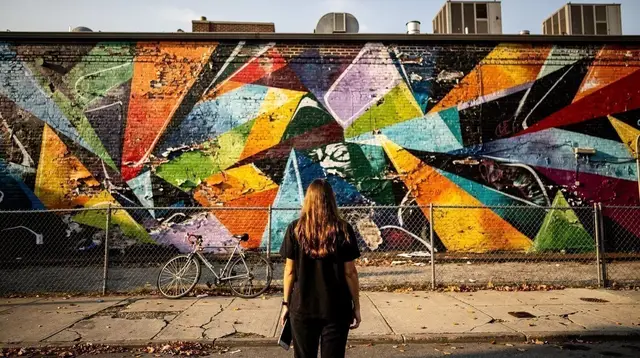
GetYourGuide does not provide a product photo for this activity — the image shows the meeting point, photographed by us.